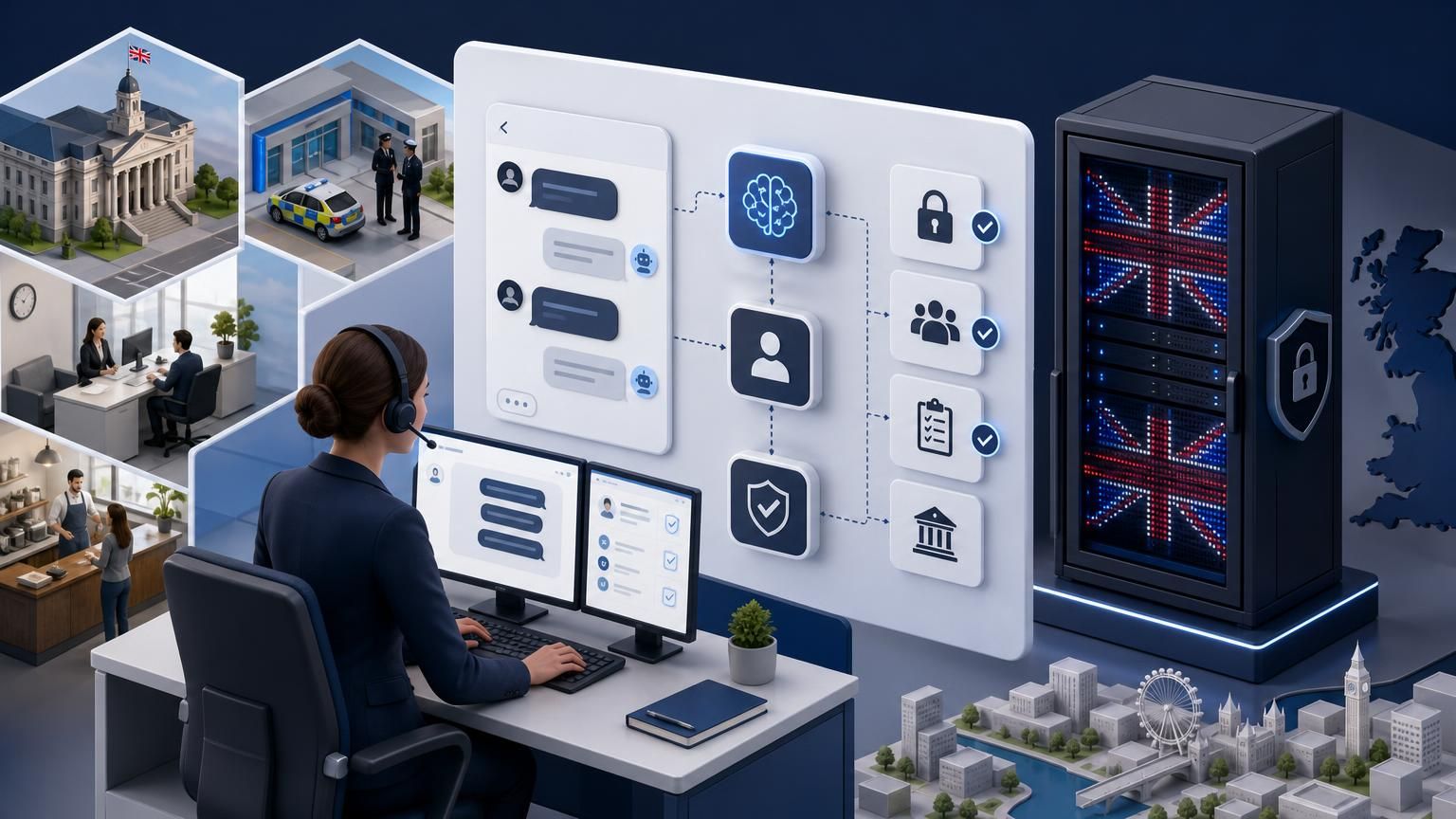
Why onboarding is the conversion lever most teams ignore
Good onboarding on your chat widget is not a welcome message — it's a conversion funnel, a risk control, and a legal boundary all at once for UK organisations.
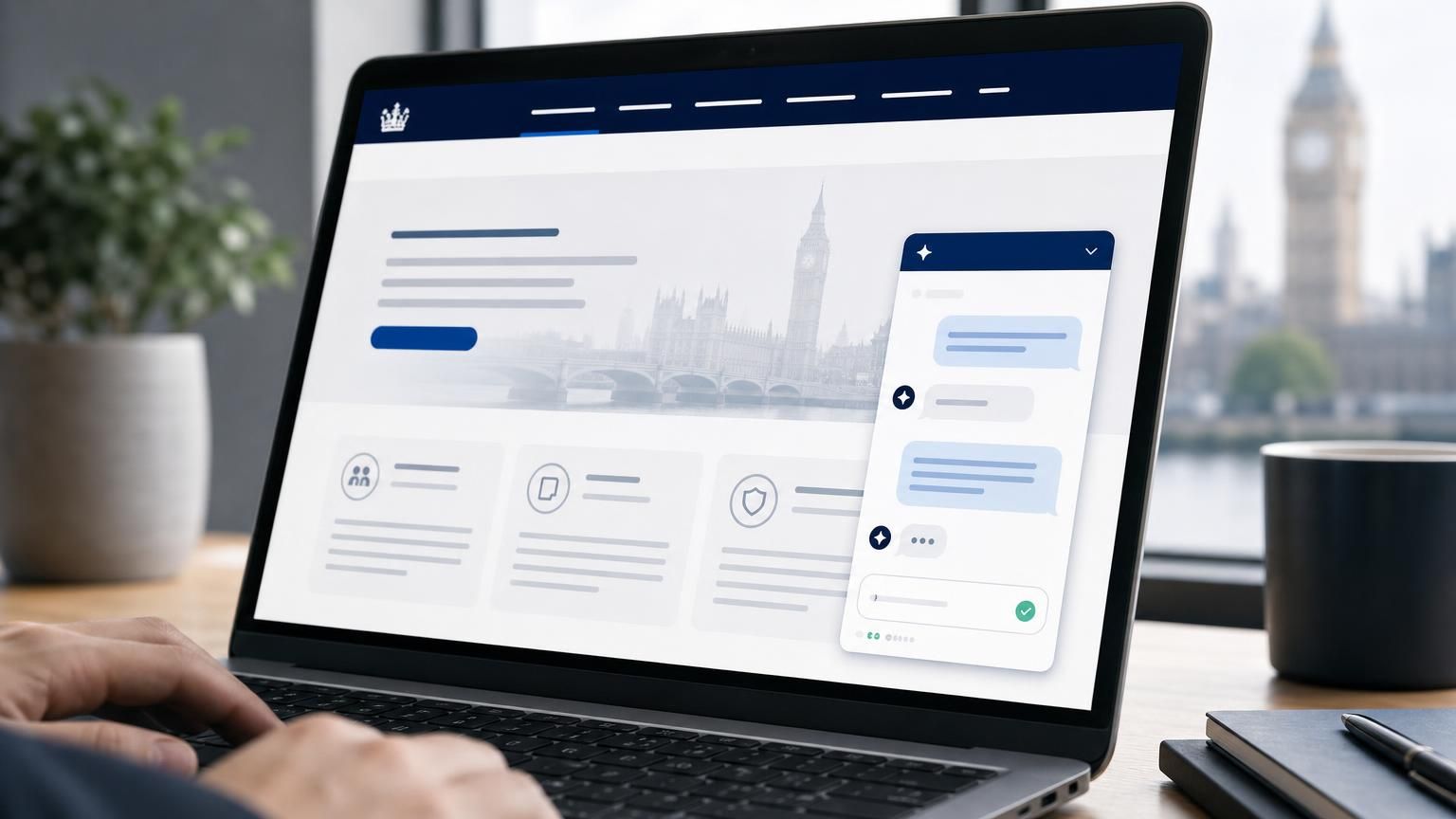
When designed properly it reduces friction, captures only the data you need, reassures regulated buyers (councils, police, housing associations) and converts visitors into engaged contacts. Live chat remains one of the highest‑intent digital channels; modern surveys place it among the top preferred support channels and show fast response expectations from users. ()
A practical stat to keep on the desk: well-crafted live chat flows can lift conversion rates by up to 20% by resolving buyer objections at the exact moment of intent. ()
The UX tradeoffs UK teams must balance
- Reduce clicks and cognitive load (fewer form fields up front).
- Keep an auditable trail for regulated processes and FOI requests.
- Preserve UK data residency and present clear processing signals.
- Give users certainty about who (AI or human) they’re talking to and when sensitive data will be captured.
These aren’t optional for public‑sector procurement; they’re procurement differentiators. The NCSC and government guidance expects services to follow cloud security principles and justify data flows when handling official information. Design decisions should map to those expectations. (ncsc.gov.uk)
Five compliance‑first onboarding patterns that actually convert
Each pattern is practical and measurable. Implement them incrementally — start A/B testing the first two.
1. Progressive identity capture (ask only when necessary)
- Start anonymous. Ask for a name/email only when you need to: to raise a ticket, recall a case, or comply with evidence rules.
- Use inline microcopy to explain why you’re asking for data and where it will be stored (short, plain English).
- Show what the user will get in return (transcript, case ID, timescales).
Why it converts: fewer upfront fields lower friction; just‑in‑time data collection raises completion rates.
2. Permissioned context cards (one‑tap consent for sensitive triage)
- Before asking any sensitive or personal question, show a one‑tap consent card that records the chosen scope.
- Store consent meta as auditable metadata for every transcript.
This pattern is ideal for police, councils and housing teams where the user needs reassurance before sharing personal details.
3. Clear agent/AI identity and handoff rules
- Label the responder: “Assistant (instant answers)” vs “Agent (human)”.
- Use predictable handoff triggers: timeouts, confidence thresholds, or keywords.
- Capture a short human‑verbatim consent before escalating to a human for sensitive topics.
Differentiation note: rule‑based chatbots follow scripted flows and are predictable; pure LLM bots generate freeform replies with no deterministic logic; hybrid AI live chat pairs immediate AI triage and retrieval with deterministic rule gates and human handoff when complexity or empathy is required. Your onboarding UX must declare which model is in play and what that means for data capture and audit trails.
4. Compact evidence bundles for regulated workflows
- When a conversation will be used as evidence, present a “create official record” toggle that converts a transcript into a sealed, timestamped bundle.
- Include on‑screen summaries that users can request before finalising.
This reduces friction for staff who need court‑ready or FOI‑friendly records while giving the user agency — essential for regulated teams.
5. Confidence flags and “why we answered that” notes
- When AI suggests an answer, attach a small confidence flag: high / medium / low and a one‑line rationale.
- If low, auto‑offer human review or a follow‑up callback.
Users trust systems that show limits. This small UI element saves repeated escalations and reduces complaint volume.
Designing the triage: rule‑based vs pure LLM vs hybrid AI (UX implications)
- Rule‑based bots: deterministic, fast for simple FAQs, low compliance risk when data capture is minimal. Use them to handle navigation, opening hours, and form completion.
- Pure LLM bots: strong at open text but unpredictable in phrasing and retrieval; they require strict output controls and are riskier for regulated answers.
- Hybrid AI live chat: combine fast retrieval and controlled logic; AI handles triage, suggested replies, and evidence summarisation, while human agents own judgement calls.
In onboarding, label the capability and expected reliability and use hybrid AI to automate first‑pass triage while deferring sensitive cases to a human. IMSupporting documents this workflow approach and the secure handoff patterns that work for UK teams. (ico.org.uk)
For teams evaluating vendors, ask for evidence of UK hosting, traceable decision logs, and policy‑driven handoffs. IMSupporting outlines hybrid AI chat workflows that are tailored for just this use case. https://imsupporting.com/feature-hybrid-ai-chat-workflows.php
Measurement: what to track and realistic targets
Track these KPIs from day one:
- Chat‑to‑contact conversion rate (target: improve baseline by 10–20% after optimisation).
- Time to first meaningful interaction (aim < 30 seconds for hybrid AI triage).
- Escalation rate to human agents (optimise down without hurting CSAT).
- Transcript completeness for regulated cases (percentage of conversations marked as evidence bundles).
- Data capture rate vs drop‑off at each step (identify form friction points).
A statistic to benchmark: users commonly expect a near‑instant reply on live chat — many studies show expectations of a few minutes for initial response — so your triage needs to be immediate. ()
Practical checklist for UK teams (deploy in 6 weeks)
- Map required data items and legal reasons for each (Data minimisation first).
- Draft microcopy for consent, evidence creation and AI transparency.
- Build progressive fields and a consent card component.
- Implement confidence flags and a predictable handoff rule set.
- Ensure hosting and logs meet NCSC/gov guidance and can be justified in procurement. (ncsc.gov.uk)
Closing: a conversion‑first, compliant onboarding is a commercial moat
UK buyers care about two things: trust and outcomes. An onboarding flow that reduces friction, states the rules clearly, and hands off to a human at the right time both increases conversions and reduces legal risk — especially for councils, police, housing associations and regulated providers.
If you want a UK‑hosted hybrid AI live chat that maps these UX patterns to secure workflows, see a practical implementation and pricing options at IMSupporting and review their hybrid AI chat workflow documentation for public‑sector patterns. https://imsupporting.com/ and https://imsupporting.com/feature-hybrid-ai-chat-workflows.php
Ready to reduce friction and prove compliance? Book a demo or review plans with IMSupporting and get a compliance‑first onboarding audit for your chat widget today. https://imsupporting.com/index.php#pricing