Why empathy must be the next live chat KPI
Live chat is no longer just a conversion tool — for councils, police, housing associations and regulated services it’s frontline public contact. That means detecting vulnerability early, triaging correctly, and handing a case to a qualified human with a full audit trail.

An "empathy‑first" approach scores conversations for emotional or safety risk in real time and uses those signals to trigger higher assurance flows, not to replace a human. UK public sector AI guidance now explicitly expects meaningful human control in high‑risk systems and insists on human oversight where needed. (gov.uk)
The practical gap: chat that sounds helpful but isn’t safe
- Rule-based widgets: fast and deterministic, but brittle for subtle signals like suicidal ideation, escalating domestic abuse, or complex housing disputes.
- Pure LLM bots: generative and fluent but prone to hallucination, inconsistent empathy, and brittle safety in edge cases unless tightly constrained. Recent research flags limitations in LLMs’ ability to consistently deliver clinical or emotionally sensitive responses. ()
- Hybrid AI live chat: the only practical model for UK regulated services — use LLMs for rich context and empathy detection, RAG/knowledge systems for factual accuracy, and a guaranteed human handover when risk thresholds are met.
Differentiate these clearly when you brief procurement, because ICO and government policy emphasise transparency, auditability and human oversight in deployments that affect individuals. (ico.org.uk)
How Empathy‑First Hybrid AI works — an architecture that public teams can buy into
- Lightweight sensors: NLP classifiers, emotion and intent models, and keyword rules look for indicators (threat language, self‑harm phrases, panic signals, legal implications). Rule triggers handle clear, high‑certainty flags; models handle nuance.
- Contextualiser (LLM + RAG): a UK‑hosted LLM layer enriched by RAG‑lookups against your policy and case knowledge so generated responses are grounded in verified sources rather than generic web content. This avoids hallucinations and keeps answers auditable.
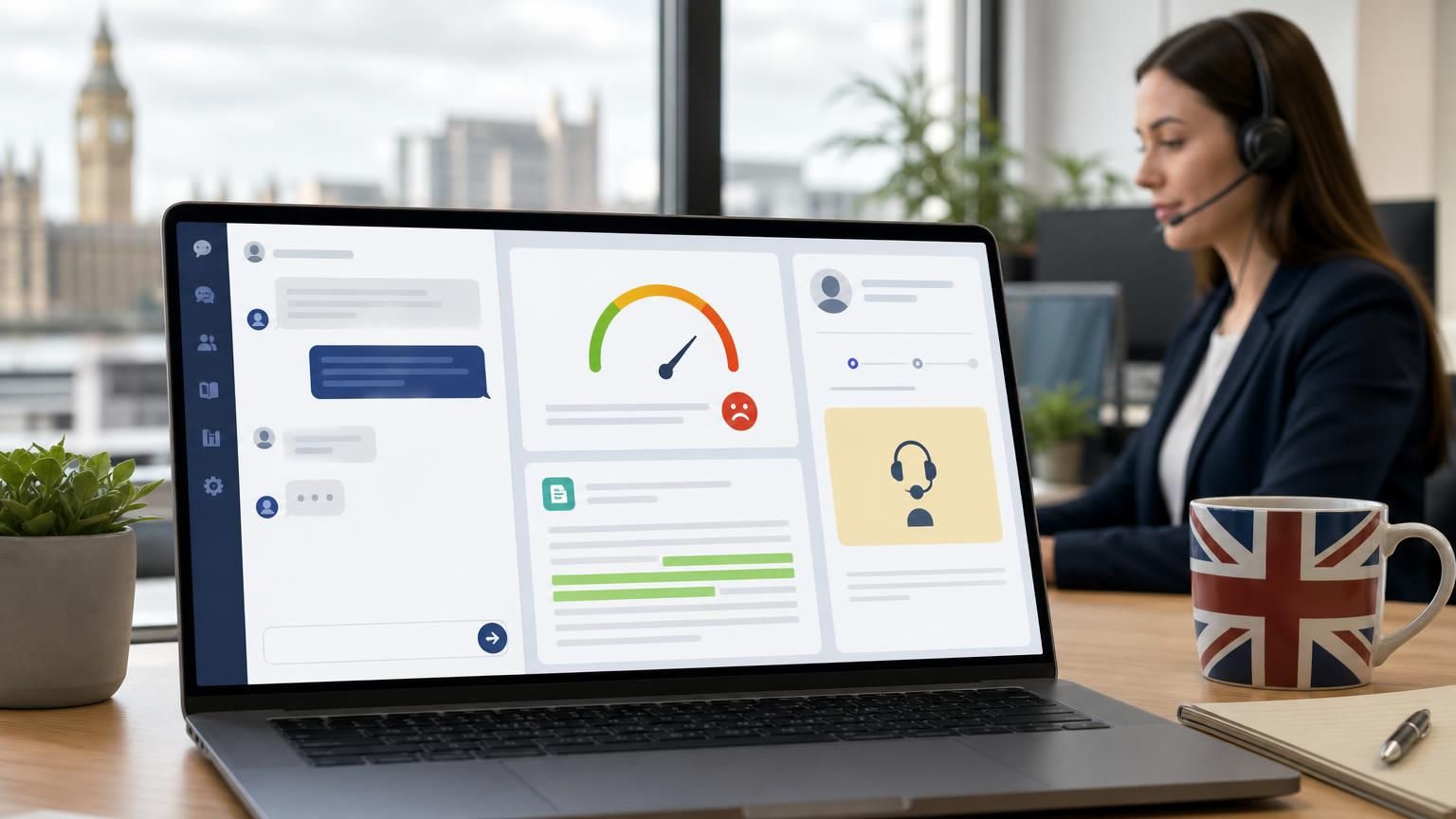
- Empathy‑Risk Scorer: a single numeric score summarises urgency and sensitivity. Scores map to SLOs and human escalation tiers.
- Human‑in‑the‑loop orchestration: when a score exceeds a threshold the system either routes to a specialised team, opens a secure callback workflow, or creates an audible/visual alert for a duty officer — with the full transcript and metadata attached.
- Immutable audit and consent log: every AI inference, the provenance of RAG evidence, and the human handover are recorded for FOI, ICO audit or internal review.
For a live example of RAG‑backed knowledge plus auditable handovers, see IMSupporting’s RAG agent knowledge and hybrid workflow features. https://imsupporting.com/feature-rag-based-ai-agent-knowledge.php and https://imsupporting.com/feature-hybrid-ai-chat-workflows.php
Why this matters for UK councils, police and regulated teams
- Data sovereignty: keep logs and models onshore to meet procurement and GDPR expectations.
- Traceable decisions: record which evidence the AI used and who took what action — essential under ICO guidance about individual rights and automated decision safeguards. (ico.org.uk)
- Procurement transparency: buying AI for public services must include disclosure and auditability commitments; central procurement guidance urges clearer vendor transparency and traceable procurement records. (gov.uk)
Implementation checklist — empathy routing you can action this quarter
- Define an empathy taxonomy: list the risk signals (self‑harm, imminent danger, legal risk, safeguarding) and map each to a required response level.
- Split responsibilities: rule‑based triggers for high‑certainty events; LLM triage for nuance; human review for medium/high risk.
- UK‑hosted infrastructure: insist on onshore hosting, encrypted logs, and export controls for datasets.
- Audit trails: log RAG sources, LLM prompts, empathy scores and the human agent who closed or escalated the case.
- Training and SOPs: agents must have scripts, escalation templates and mental‑health/safeguarding training relevant to the signals they’ll see.
- Testing: run scenario playbooks (including FOI/Subject Access Request scenarios) and keep a change log for any model or rule update.
Operational play: escalation patterns that reduce harm and liability
- Tier 1 (Information): automated replies with RAG‑backed links to policy and self‑service guidance.
- Tier 2 (De‑escalation): hybrid LLM suggests empathetic wording and invites a human agent; agent sees annotated transcript with empathy score.
- Tier 3 (Immediate human): auto‑escalate to a trained agent or duty officer, create a case in back‑office systems and trigger an audit event.
This pattern keeps routine flows fast while ensuring vulnerable interactions always get human judgement.
Measuring success — KPIs that matter to finance and safeguarding teams
- Safety lift: % of high‑risk conversations escalated within target SLA.
- False positive rate: % of escalations later judged unnecessary (monitor to avoid agent fatigue).
- Audit completeness: % of cases with full provenance recorded (RAG source + agent action).
- Service impact: reduction in time‑to‑resolution for complex cases and improved trust metrics from public surveys.
Government and ethical frameworks insist on human oversight at the right stage for high‑risk AI deployments — structure your KPIs around that requirement, not just cost savings. (gov.uk)
Quick example — housing association scenario
A tenant messages at 22:10 mentioning self‑harm and a threatened eviction. Rule triggers flag the keywords and assign a high empathy score. The hybrid flow immediately: (a) shows the agent the RAG evidence (tenancy policy excerpts), (b) pulls the resident’s case history, and (c) auto‑escalates to a safeguarding duty officer with a prefilled case note. The agent receives mental‑health guidance popups and records the outcome. All steps are time‑stamped and stored onshore for future review.
Procurement and governance language to use in tenders
- "UK‑hosted inference and logs with end‑to‑end encryption and export controls."
- "Auditable RAG provenance: every AI response must list the document(s) used."
- "Human‑oversight SLA: automatic handover when empathy‑risk exceeds defined thresholds."
Including explicit requirements like these will save time in procurement and reduce supplier risk.
Next step — proof of concept with procurement‑friendly controls
If you need a procurement‑ready hybrid AI partner that supports RAG knowledge, auditable workflows and UK hosting, review IMSupporting’s features and arrange a demo: https://imsupporting.com/feature-rag-based-ai-agent-knowledge.php and https://imsupporting.com/feature-hybrid-ai-chat-workflows.php
Ready to move from risky automation to empathy‑first live chat? Speak to a team that can deploy UK‑hosted hybrid AI with audit trails, human‑in‑the‑loop routing and public‑sector procurement support: https://imsupporting.com/ — book a demo and share your empathy taxonomy; we’ll show a working POC with your scenarios.
Final note
Hybrid AI isn’t a shortcut to replace people — for UK regulated services it’s how you scale humane, auditable support without increasing legal or safeguarding risk. Design your chat to detect feelings, not to fake empathy; route the human decisions where they belong.