
Why hybrid AI must own triage for UK safeguarding and incident reporting
Public-sector and regulated teams (councils, police units, housing associations, NHS partners) face two constant problems: incoming reports that need immediate risk triage, and fragile chains of evidence when escalation becomes necessary. Digital front doors reduce friction — but a slow or poorly recorded triage step risks harm, regulatory breach or lost evidence.
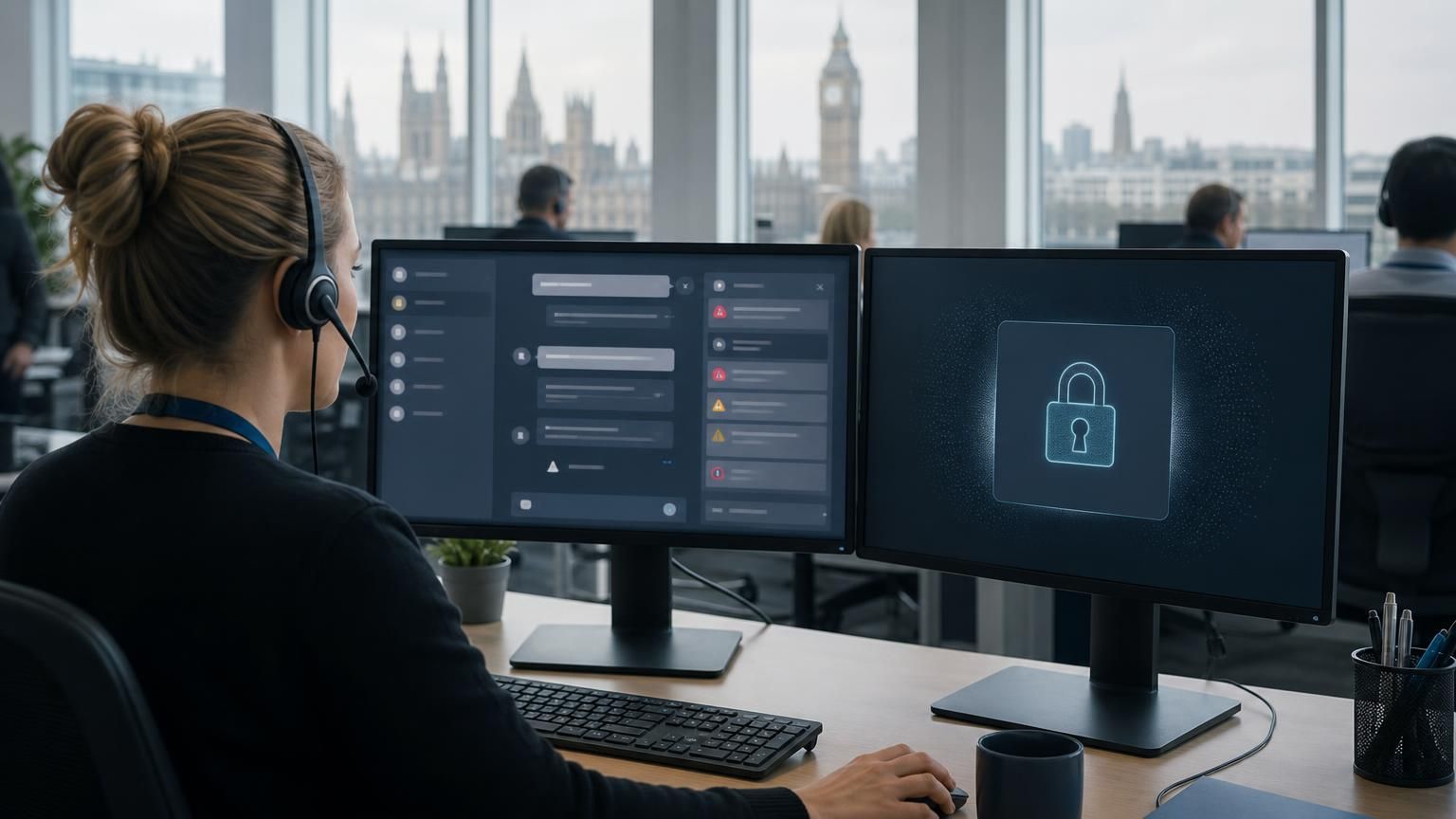
The Information Commissioner’s Office has issued clear guidance on AI and data protection that stresses accountability and lifecycle risk management for AI systems. Organisations deploying AI for sensitive workflows must treat data protection as a functional requirement, not an add‑on. (ico.org.uk)
At the same time UK safeguarding guidance requires immediate action where significant harm is suspected; that means triage tools must enable instant, auditable decisions and clear human handovers. Automating triage is valuable only if it preserves the legal and investigatory chain. (gov.uk)
What 'triage' needs to deliver — a short checklist
- Immediate risk scoring and routing (danger, urgent, non‑urgent).
- Immutable, timestamped transcript and evidence bundle.
- Data residency and UK‑hosting guarantees for regulated records.
- Redaction and privacy-safe exports for multi‑agency sharing.
- Fast human handover with clear decision rationale for auditors.
Local government leaders are already prioritising a digital front door strategy that uses smart tools to speed access and reduce back‑office burden — but those tools must be designed for safeguarding, not just convenience. (local.gov.uk)
Three architectures explained: rule‑based, pure LLM, hybrid AI
Rule‑based chatbots
Rule‑based systems follow scripted flows and are safe for predictable forms processing (e.g., contact details, basic categorisation). They are deterministic and easy to audit but brittle when callers provide unexpected or sensitive disclosures.
Pure LLM bots
Large language model bots can parse free text and generate human‑like responses, but they risk hallucination, unpredictable outputs and opaque decision logic. Used alone they’re a poor fit for statutory triage because they complicate evidentiary traceability.
Hybrid AI live chat (the practical choice)
Hybrid AI combines retrieval (trusted knowledge + RAG), deterministic business logic and LLMs for natural language understanding — with always‑on rules to escalate high‑risk content to humans. This architecture gives you:
- Reliable access to vetted policy or case notes via RAG retrieval.
- Natural‑language triage for frontline users.
- Clear guardrails and auditable handovers to human agents.
IMSupporting products implement this pattern: RAG‑based knowledge agents for precise retrieval and hybrid chat workflows for triage and handover. See IMSupporting’s RAG feature and hybrid workflows pages for how this is built in practice. https://imsupporting.com/feature-rag-based-ai-agent-knowledge.php (ico.org.uk)
Practical design patterns for compliant triage
1) UK‑hosted data and service boundary
Mandate that all transcripts, attachments and knowledge stores remain UK‑hosted and under contractual control. This reduces cross‑border risk and aligns with public‑sector procurement expectations.
2) Risk tiering with deterministic thresholds
Use hybrid AI to build a three‑tier risk model: immediate police/children’s services referral; expedited human review within 30 minutes; or standard case creation. Deterministic thresholds must always override the LLM output.
3) Evidence preservation and forensics export
Record immutable transcripts and capture attachments in an evidence bundle that includes timestamps, agent IDs and retrieval snapshots. The export must be readable by partner agencies and include redaction options.
4) Explainable handovers and decision notes
When the AI hands to a human, attach the retrieval context (policy snippets, previous interactions) and a short, auditable rationale for the suggested route — vital for later reviews or SARs.
5) Privacy‑safe automation
Where possible, use automated form fills and anonymised summaries to minimise personal data in external communications — while preserving full detail in the secure evidence store.
An operational playbook: deploy in 6 pragmatic steps
- Map statutory workflows and define deterministic escalation triggers (keywords, severity scores, missing consent indicators).
- Configure a RAG index of vetted policies, legislation and local guidance; keep versioned snapshots. (IMSupporting’s RAG feature is designed for this.) https://imsupporting.com/feature-rag-based-ai-agent-knowledge.php. (ico.org.uk)
- Build hybrid chat flows so the AI does initial triage, then creates an evidence bundle and opens a human queue when thresholds hit. See IMSupporting hybrid workflows for examples. https://imsupporting.com/feature-hybrid-ai-chat-workflows.php
- Validate with safeguarding leads and data‑protection officers; run tabletop exercises and measure time‑to‑decision.
- Integrate secure export connectors for police and partner agencies; include redaction routines and clearly logged consent handling.
- Monitor, audit and iterate: log false negatives, near misses, and handover delays and feed them back into the RAG index and rules.
KPIs and governance to track
- Median time to first‑decision after user contact (target: minutes, not hours).
- % of reports auto‑triaged correctly vs. manual reassignments.
- Audit completeness (evidence bundle present, timestamps, rationale).
- Number of emergency escalations and post‑escalation outcomes.
A realistic target for mature services is to reduce manual triage effort by over half while keeping escalation rates and audit quality at regulatory standard. Use controlled pilots with front‑line teams before broad rollout.
Technology checks before procurement
- Confirm UK data residency and contractual clauses for data processing.
- Ensure RAG indices are versioned and exported as PDFs for audits.
- Ask for immutable audit logs with cryptographic timestamps.
- Review the vendor’s incident response and ICO engagement history — the ICO runs innovation advice services and has published clear AI risk guidance for organisations. (ico.org.uk)
Quick wins for councils, police units and housing teams
- Replace first‑contact web forms with a hybrid live chat widget that captures a full transcript and evidence bundle automatically.
- Auto‑route likely high‑risk reports to a dedicated safeguarding queue with 24/7 human cover or an on‑call rota.
- Use RAG retrieval to attach the latest local policy snippet to every escalation — saves time and boosts consistency.
Example: several councils already publish online referral forms and professional reporting pages; integrating hybrid chat into that path closes the gap between contact and action. (portsmouth.gov.uk)
Final practical note and call to action
If your procurement or support team needs a UK‑hosted hybrid AI live chat that combines RAG retrieval, deterministic triage rules and auditable human handovers, explore IMSupporting’s hybrid workflows and RAG‑based agent knowledge pages to see how these patterns map to real product features. https://imsupporting.com/feature-hybrid-ai-chat-workflows.php https://imsupporting.com/feature-rag-based-ai-agent-knowledge.php
Book a demo or read a technical brief to assess how a UK‑hosted hybrid solution can shrink time‑to‑triage, preserve evidentiary chains and keep your service compliant. Visit IMSupporting to start a pilot. https://imsupporting.com/
Short checklist to take to procurement
- UK‑hosted data and exportable evidence bundles
- Deterministic escalation overrides for high‑risk signals
- RAG retrieval with versioned policy snapshots
- Immutable, auditable handovers and timestamps
- Strong DPO and safeguarding lead involvement
Deploying hybrid AI live chat for safeguarding is not about replacing humans — it's about giving them faster, safer and auditable triage so statutory duties are met on time and evidence is preserved for downstream action.