Why identity-safe live chat is now a frontline requirement
UK councils, police forces, housing associations and regulated teams no longer treat live chat as a mere convenience. It’s a primary access channel for sensitive requests — benefit checks, housing applications, crime reporting, and regulated advice — which means conversations often touch personal data and identity evidence.
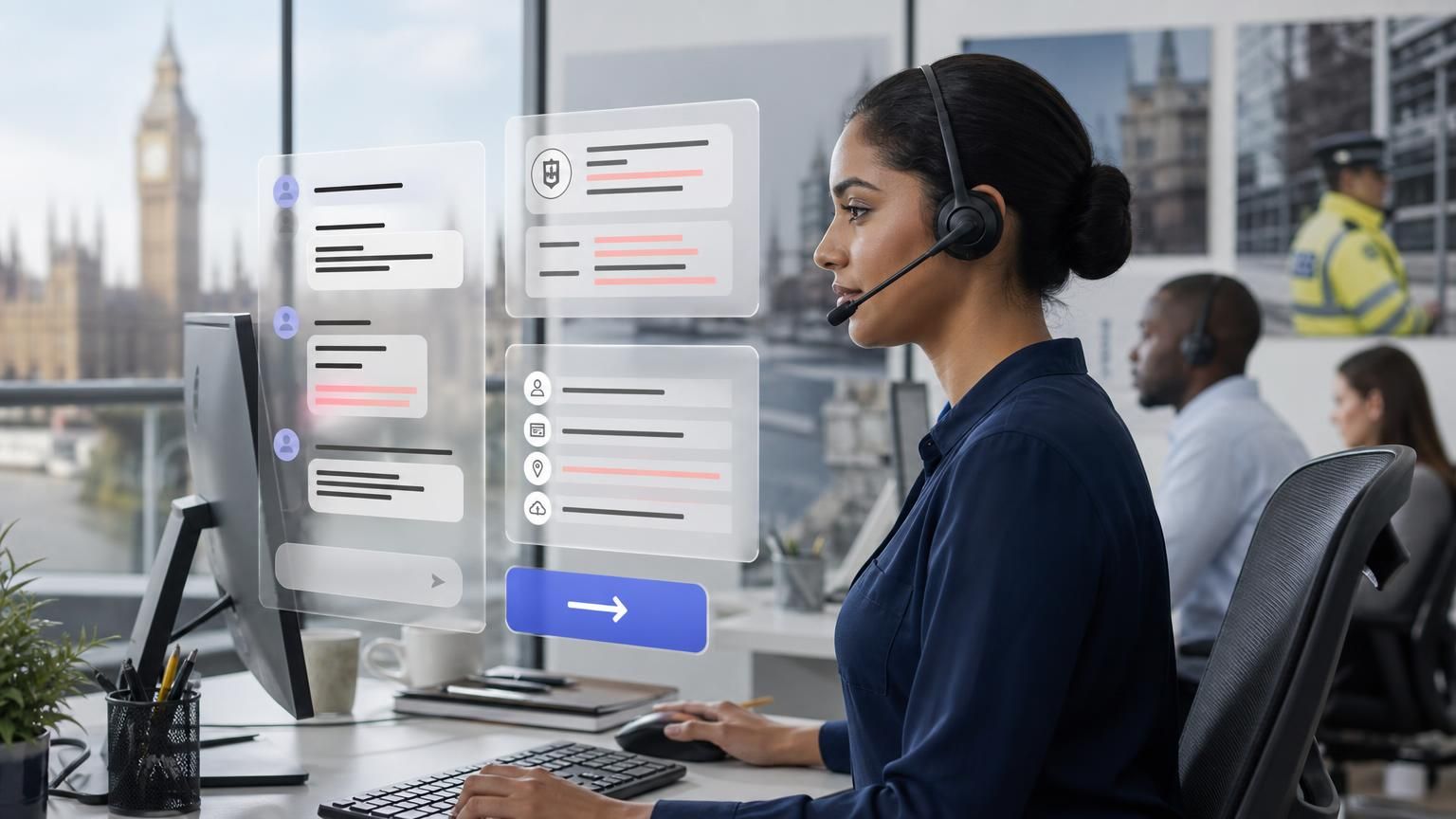
A live chat strategy that mixes automated triage with clear human handovers reduces friction and risk. Done right, it speeds first contact resolution while preserving auditability and onshore data control. Studies show digital assistance and chat channels can raise sales and productivity in transactional contexts — similar gains are possible for support throughput when identity handling is baked into the architecture. ()
Distinguish the three chatbot types (so you pick the right stack)
Rule-based chatbots
- Follow scripted flows and deterministic rules. Good for simple FAQs and form completion. Low risk, predictable outputs.
- Limitation: brittle with unexpected language, poor at summarising attachments or free-text identity evidence.
Pure LLM bots
- Large language models generate fluent replies and can reason over prompts. Useful for drafting responses and summarising conversation history.
- Risky for regulated identity tasks: hallucination, sensitive data leakage, and unclear provenance unless tightly controlled.
Hybrid AI live chat (recommended for identity work)
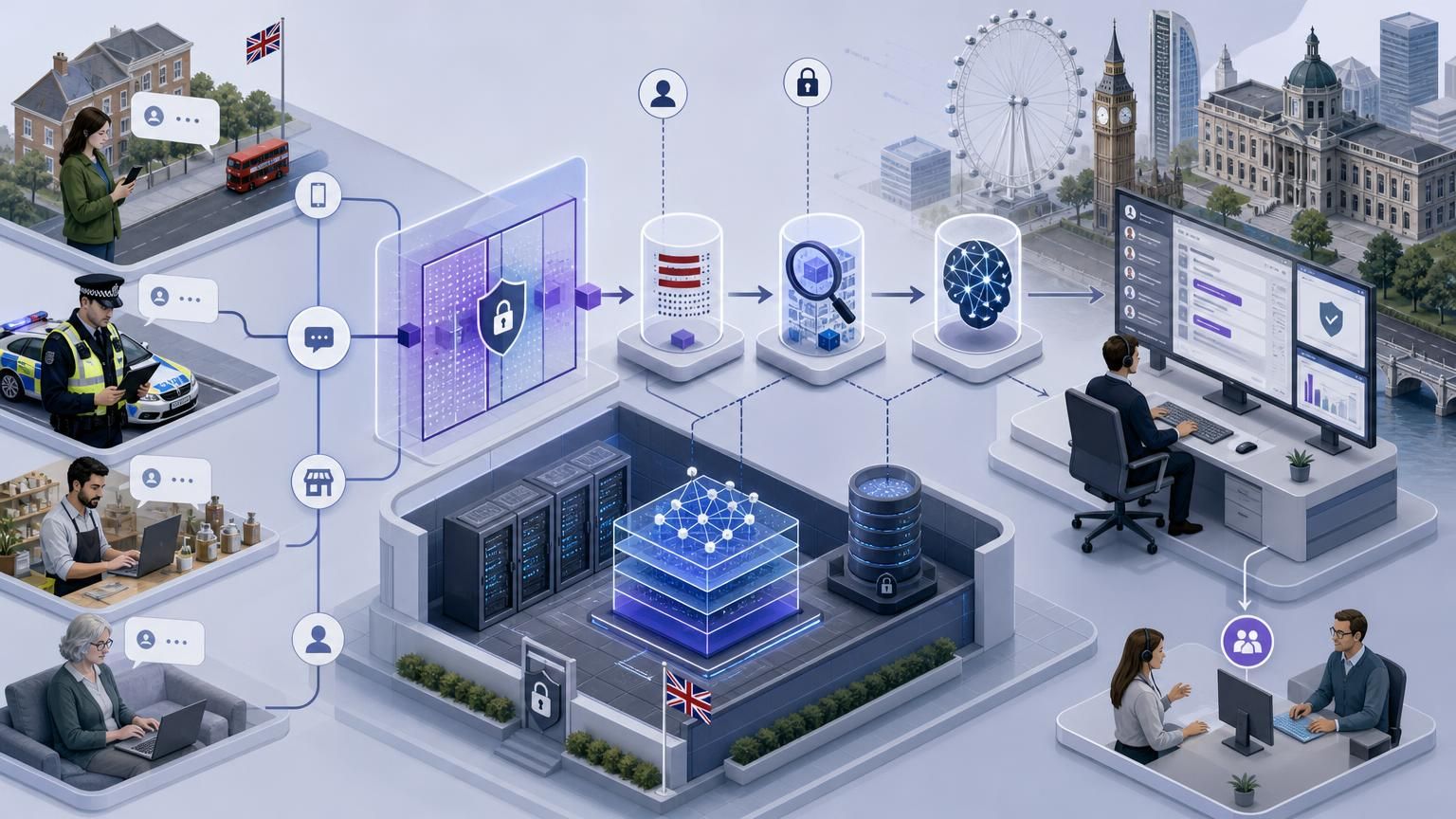
- Combines onshore RAG (retrieval‑augmented generation) over verified knowledge, deterministic redaction, automated risk scoring, and human-in-the-loop handovers when thresholds are met.
- Offers the speed of LLMs with auditable retrieval and conservative policy enforcement — essential for UK public services and other regulated organisations. ()
Practical identity-safety patterns to build into hybrid live chat
- Local vector stores for sensitive data: keep embeddings and evidence on UK-hosted storage so PII never leaves jurisdiction. This reduces regulatory exposure and helps meet procurement expectations. (gov.uk)
- Deterministic redaction before model input: automatically strip or tokenise names, national identifiers and images before any LLM forward pass.
- Risk-scoring micro-policies: assign conversation-level risk (low/medium/high) based on keywords, attachments or user metadata; high-risk triggers immediate human escalation.
- Evidence fingerprinting and transcript anchors: attach immutable evidence IDs to handovers so auditors can trace who saw what and when.
Architecture blueprint (high-level)
- Inbound channel: web chat widget with secure file upload and CAPTCHA.
- Pre-processor: deterministic PII redactor + evidence harvester (stores a hashed reference in a UK-hosted database).
- Retriever & knowledge layer: RAG module that pulls only from approved, onshore knowledge sources for context. Use a hybrid retriever that combines text and structured sources for better precision. ()
- LLM agent: runs in a constrained mode (answer templates, source attribution) or on a private LLM instance if required.
- Human orchestrator: real-time operator view with suggested replies, provenance trail, and one-click take-over.
- Audit & retention: immutable logs and retention policies aligned with ICO guidance and procurement requirements. (cy.ico.org.uk)
Procurement and compliance checklist for UK buyers
- Confirm UK hosting and data residency for PII and evidence stores.
- Require RAG-style source attribution and explainability in the spec. Ask for an auditable handover flow and evidence fingerprinting. (gov.uk)
- Insist on a tested redaction pipeline and human-in-the-loop thresholds for identity-sensitive work.
- Include a clause for operator training and logging to support FOI, complaints and SAR workflows.
Use cases that move the needle (and who benefits)
- Councils: faster benefits triage with redacted uploads and auditable transfers to welfare officers.
- Police non-emergency lines: initial incident capture, evidence tagging, and escalation to trained units when risk is flagged.
- Housing associations: safe collection of tenancy evidence and identity checks with minimal manual rework.
- Regulated teams: financial or legal advice desks that demand provenance for every decision.
Implementation tips — how to avoid the common traps
- Don’t let LLMs see raw PII. Run an explicit redaction step first.
- Don’t treat hybrid AI as a product feature — treat it as an operational workflow that changes training, SLAs and record-keeping.
- Validate the system with tabletop exercises that include FOI and DSAR scenarios; public-sector procurement guidance emphasises this readiness. (gov.uk)
Why a UK-hosted hybrid AI partner matters commercially
Working with a UK-hosted vendor reduces procurement friction, shortens contract reviews, and aligns with the ICO’s expectations for accountable processing. It also simplifies audits and reduces vendor lock‑in risk when evidence and RAG indexes remain onshore. (cy.ico.org.uk)
For a practical starting point, compare feature-level capabilities such as RAG-backed agent knowledge and pre-built hybrid chat workflows to ensure the product supports redaction, auditable handovers and human takeovers. See IMSupporting’s RAG agent knowledge and hybrid workflows pages for concrete feature maps and deployment examples: https://imsupporting.com/feature-rag-based-ai-agent-knowledge.php and https://imsupporting.com/feature-hybrid-ai-chat-workflows.php
Quick roadmap (90-day pilot)
- Week 1–2: Define high-risk intents, evidence types and SLAs.
- Week 3–6: Deploy a UK-hosted pilot with redaction and RAG over a small knowledge corpus.
- Week 7–10: Run parallel human shadowing and refine risk thresholds.
- Week 11–12: Deliver audit artefacts, update procurement docs and sign off scope for rollout.
Hybrid AI live chat is now a strategic channel for identity-sensitive public and regulated services — not just a convenience. If you need a UK-hosted platform that combines onshore RAG, auditable human handovers and production-ready hybrid chat workflows, review practical deployment patterns and feature details at IMSupporting: https://imsupporting.com/ and contact their team to discuss a procurement-ready pilot.
Call to action: book a pilot or technical review with IMSupporting to map your identity-safe hybrid chat plan and procurement brief.