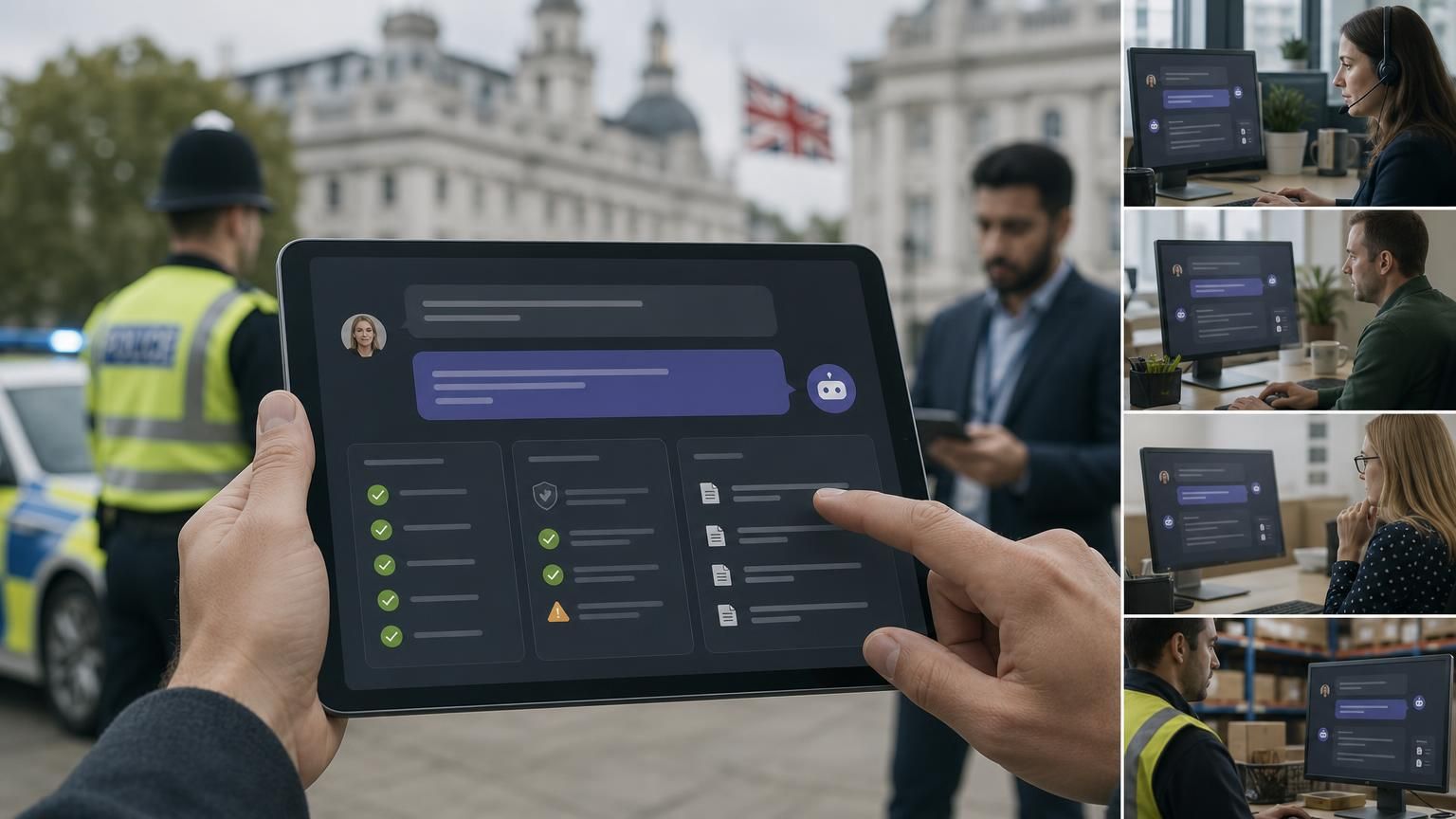
Why policy-as-code is the missing layer for regulated UK support
Support teams in councils, police forces, housing associations and regulated businesses face a simple tension: customers want fast, conversational answers, while regulators insist on auditable, policy-compliant decisions. Left unchecked, generic chat and LLM outputs create regulatory risk, inconsistent messaging and data‑sovereignty headaches.

Policy-as-code makes compliance executable: rules and guardrails are written as software that the live chat stack enforces in real time. That converts high-level constraints (data sharing limits, referral pathways, required checks) into machine-enforceable checks inside the chat flow — no manual guesswork, no ad-hoc agent improvisation.
The market context you need to know
- Digital channels are now core to citizen and customer expectations. Large CX studies show consumers have clear channel preferences for certain tasks and expect fast replies; many expect a response within minutes. ()
- UK public services remain cautious but curious: research shows only a minority of councils use automated chat features today, highlighting both opportunity and the need for careful, compliant rollouts. ()
- Central government is actively funding responsible AI adoption in policing and public services — which means compliant, auditable deployments are now a procurement advantage. (gov.uk)
Those three realities create a narrow commercial window: deploy fast, but deploy with governance baked in.
What policy-as-code in hybrid AI live chat actually looks like
Policy-as-code for live chat combines three technical building blocks:
- A RAG (retrieval-augmented generation) layer that grounds any AI answer in verified documents, policy texts and local knowledge stores. This prevents hallucinations by forcing citations and source tracing. ()
- A policy engine that expresses constraints (data sharing, PII exposure limits, escalation conditions, scripted referral text) as executable rules — think 'if X and user group = council tenant then require Y check before sharing Z'.
- A hybrid AI/live human workflow that lets AI triage and suggest compliant responses but requires human sign-off or override for high-risk decisions.
Put together, the system: retrieves relevant policies (RAG), generates a recommended reply, validates that reply against policy-as-code, and either returns the response or routes to a human with a clear audit trail.
Rule-based bots, pure LLM bots, and hybrid AI — practical differences
- Rule-based chatbots: deterministic scripts and decision trees. Strong on compliance if rules are exhaustively coded, but brittle and costly to scale.
- Pure LLM bots: great at natural language but prone to hallucinations, inconsistent tone, and compliance failures without external controls.
- Hybrid AI live chat: the sweet spot. Use LLMs for language and triage, but ground outputs with RAG and enforce policy-as-code before any user-facing text is delivered.
For UK public sector and regulated organisations, hybrid AI with policy enforcement is the only pragmatic path that balances UX and governance.
Design patterns that work for councils, police and housing associations
- Policy-first triage: capture required identity and consent data before any advice is given. If checks fail, the policy engine locks the flow and prompts a safe escalation.
- RAG with named sources: every AI suggestion must list the policy or document it used — useful in FOI or complaint scenarios. ()
- Consent and data residency gates: ensure any external model calls or analytics run only if the policy engine allows data export; otherwise keep processing entirely UK-hosted.
- Role-aware responses: the chat should surface different answer templates depending on user type (citizen, tenant, officer), enforced by policy rules.
How to measure success (commercial KPIs)
Track both UX and risk metrics:
- Speed: average first response time for automated vs human-handled chats. Many customers now expect near-instant replies; meeting that lowers abandonment. ()
- Compliance coverage: percent of conversational paths validated by policy-as-code.
- Escalation accuracy: percent of escalations where the human accepted the AI-recommended action.
- Audit completeness: share of transcripts with full RAG source links and an immutable policy validation record.
- Cost per contact during spikes: hybrid AI reduces human load while preserving compliance.
Implementation checklist — practical, low-risk rollout
- Map your high-risk conversational intents (eligibility, safeguarding, legal advice, data sharing).
- Convert those policies into executable rules (policy-as-code) with clear pass/fail outcomes.
- Build a RAG index of verified documents, local knowledge bases and scripts — prioritise UK-hosted storage for regulated data. ()
- Prototype hybrid flows where AI proposes and humans approve for a sample set of intents.
- Run a controlled pilot during off-peak months and capture audit data for procurement and ICO review.
- Scale with ongoing policy reviews and a governance dashboard that shows rule changes and impacts.
Procurement and data-sovereignty pointers for UK buyers
- Specify UK-hosted indexing and storage for all PII and policy documents; demand a clear data export policy from vendors.
- Require immutable audit logs for every policy decision and human handoff to pass internal and external audits.
- Ask for a demonstrable RAG approach and the ability to whitelist or blacklist sources used for grounding; that protects sensitive document usage. ()
- Include a compliance acceptance period in contracts so supervised models and policy rules can be tuned before full go-live.
A short business case for decision-makers
- Faster first replies and safe automation reduce operational pressure and improve citizen satisfaction. Industry research shows digital channel preferences shifting toward chat when it’s reliable and fast. ()
- Policy-as-code prevents the biggest hidden cost: remediation after incorrect advice (complaints, reputational damage, regulatory fines).
- For police and councils, using policy-as-code maps directly to procurement and funding priorities around responsible AI and auditable deployments. (gov.uk)
Next steps — evaluate a platform that supports RAG + hybrid workflows
If you need a practical starting point, look for platforms that combine RAG-grounded AI with built-in hybrid AI chat workflows and a policy engine you can own. Review feature pages that describe RAG-based agent knowledge and low-code hybrid chat workflows so you can see how policy-as-code maps into real flows: https://imsupporting.com/feature-rag-based-ai-agent-knowledge.php and https://imsupporting.com/feature-hybrid-ai-chat-workflows.php
To explore a UK-hosted, compliance-first hybrid AI live chat approach and request a tailored pilot for councils, police or regulated teams, visit https://imsupporting.com/ and book a demo.
Final take
Policy-as-code turns compliance from an afterthought into a product requirement. For UK public services and regulated organisations the path is clear: adopt hybrid AI live chat that grounds replies with RAG, enforces rules in real time, and keeps sensitive processing in-country. Do that and you get both speed and auditability — the two pillars procurement teams ask for.