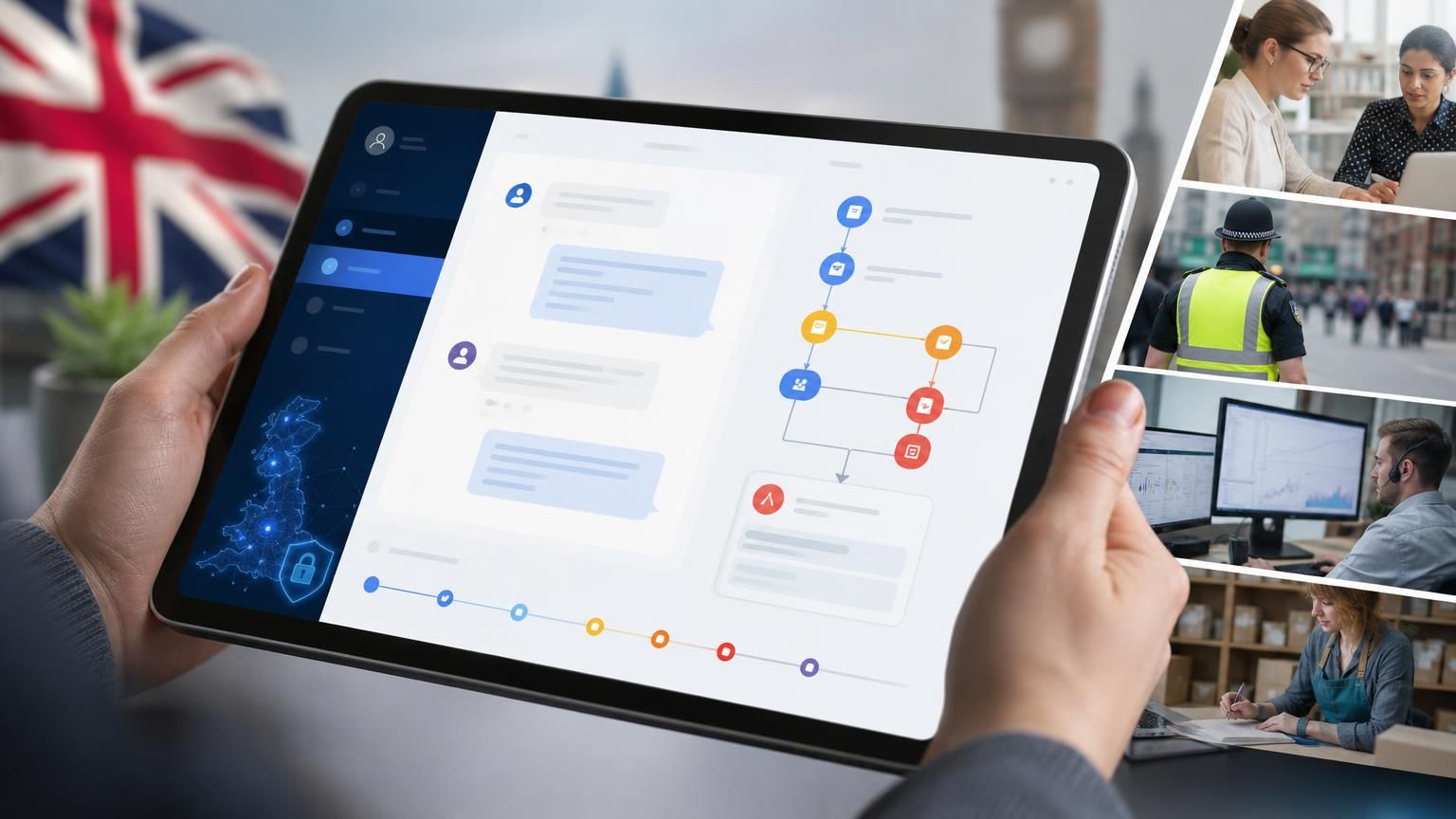
Why predictive triage matters for UK public and regulated teams
Local government services, housing associations, police and other regulated organisations increasingly face two simultaneous pressures: rising contact volumes and zero-tolerance for mistakes in sensitive cases. Predictive triage in a UK‑hosted hybrid AI live chat setup identifies likely high‑risk conversations early and routes them to the right human specialist — before harm, delay or complaint occurs.
More than 300 local authorities and public bodies have signed up to the Local Digital Declaration and are actively experimenting with chatbots and AI to improve citizen access and reduce manual load. (localdigital.gov.uk)
Predictive triage turns live chat from a reactive widget into a preventive front door: it reduces handoffs, improves first‑contact resolution for routine enquiries, and flags complex cases (safeguarding, fraud, housing disrepair with legal consequences) for human oversight.
What predictive triage looks like in practice
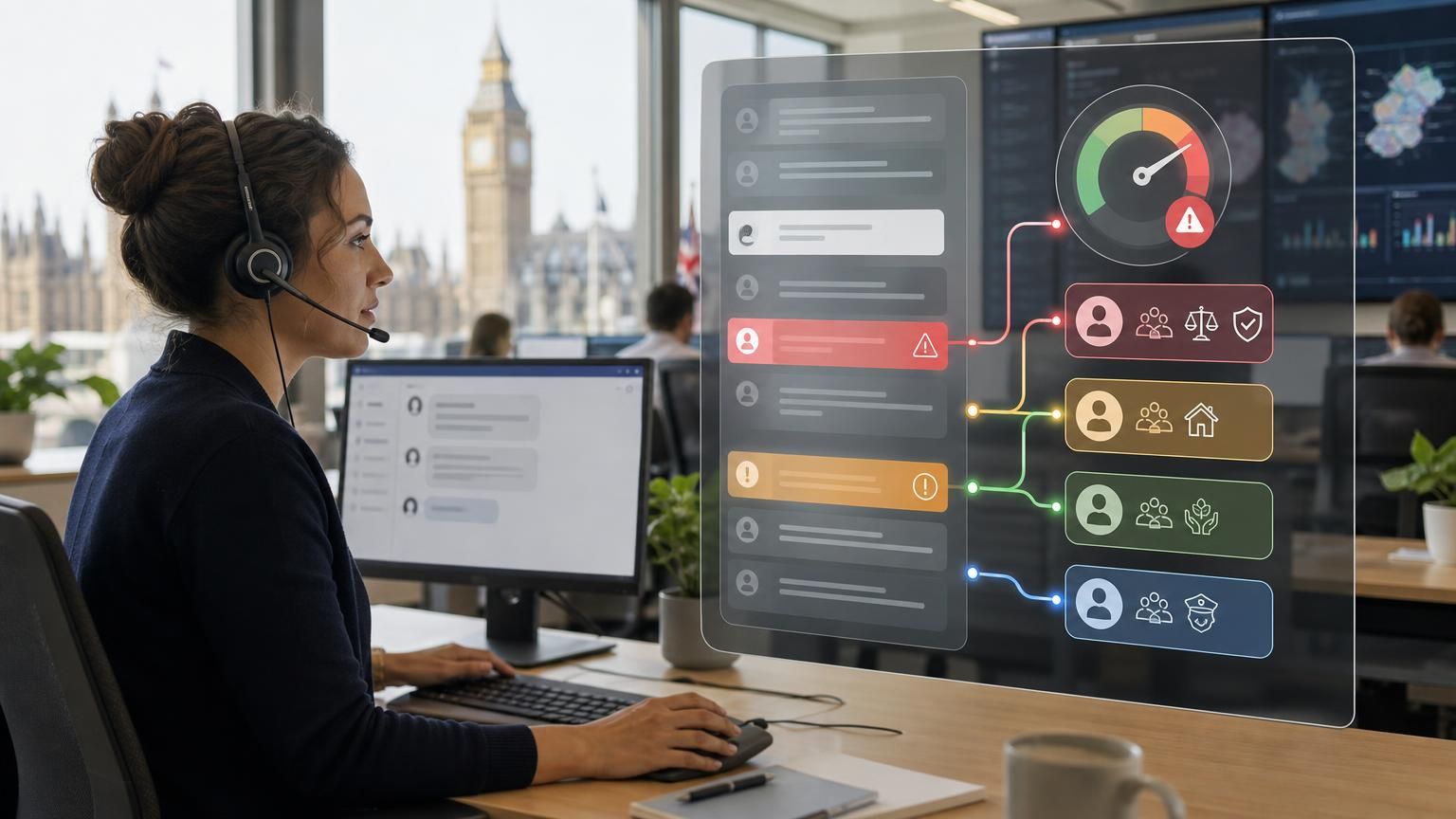
- Smart intent detection at greeting: the chat detects words, tone markers and case features that indicate complexity or risk.
- Risk scoring: a lightweight score (low/medium/high) is calculated using an ensemble that mixes rules, knowledge‑lookups and model-based signals.
- Policy filters: any conversation touching regulated areas triggers immediate human review or mandatory identity verification steps.
- Seamless routing: high‑risk chats are routed to named specialists, with context, priority notes and an audit trail.
This is not science fiction — councils and public services are already piloting webbots and live webchat phases as part of their Local Digital commitments, using these channels to provide 24/7 access and improved signposting. (localdigital.gov.uk)
Rule‑based chatbots, pure LLM bots and hybrid AI: how they differ
- Rule‑based chatbots: deterministic flows and fixed decision trees. They’re reliable for scripted, repeatable tasks (opening hours, form links) but brittle when queries fall outside predefined paths.
- Pure LLM bots: generative models that produce human‑like responses and can summarise. Excellent for nuance, but unpredictable, harder to audit, and risky for regulated decisions if left unsupervised.
- Hybrid AI live chat: the pragmatic middle ground. A hybrid system uses retrieval (RAG), curated knowledge bases and lightweight models to answer routine queries instantly, while a policy layer and routing workflows hand complex or high‑risk conversations to human agents. Hybrid preserves speed and control while keeping the human in the loop where it matters.
If you want a technical example of RAG and agent knowledge working in hybrid systems, see a practical product‑level explanation here. [RAG-backed AI agent knowledge].(https://imsupporting.com/feature-rag-based-ai-agent-knowledge.php)
If your priority is maintaining momentum through handoffs, hybrid chat workflows let AI handle initial triage while orchestration rules guarantee immediate human ownership for escalations. [Hybrid chat workflows].(https://imsupporting.com/feature-hybrid-ai-chat-workflows.php)
Why UK‑hosting and data sovereignty are non‑negotiable
For councils, police and many regulated services, where data is stored and how it’s processed are strategic and legal decisions. GOV.UK’s AI Playbook warns services that AI used in decisions that affect legal status or rights must include human decision makers and clear governance controls — a rule that aligns with predictive triage design (AI flags; humans decide). (gov.uk)
The ICO is also developing clearer expectations around AI and automated decision‑making, and is working toward a statutory code of practice — organisations must treat AI governance as a core compliance control, not an optional add‑on. (ico.org.uk)
Keeping the chat stack UK‑hosted simplifies procurement for public bodies, reduces cross‑border data transfer complexity, and reassures citizens that sensitive reports (domestic abuse, benefit disputes, hate crime) remain under UK jurisdiction.
Operational controls: design patterns for safe predictive triage
Lightweight risk scoring
- Use simple, explainable features (intent tags, keywords, form inputs) to produce a triage score.
- Cap automated responses on medium/high scores; require immediate human takeover for high scores.
Policy gates and human override
- Build policy gates mapped to legal outcomes (safeguarding, enforcement, benefit decisions).
- Ensure human override is a single click from the agent UI and capture the rationale in the audit trail.
Auditability and retention
- Persist the triage score, triggered policy, and agent handover notes in the transcript for FOI, SARs and audit reviews.
- Keep retention policies aligned with public sector records management rules.
Explainability and transparency
- Present agents with structured reasons for why the chat was flagged (top 3 signals). That speeds trust and reduces false positives.
Implementation checklist for UK organisations
- Map the 20–30 highest‑risk intents across your services (housing, social care, benefits, safety reports).
- Build a curated knowledge base for routine queries; use RAG for contextual lookups where policies change often. [See RAG feature].(https://imsupporting.com/feature-rag-based-ai-agent-knowledge.php)
- Create routing rules that link triage scores to named rosters and on‑call experts; test fallbacks for out‑of‑hours.
- Establish an AI governance board with legal, data protection and frontline reps; log decisions and tuning changes.
Measuring success — KPIs that matter to decision‑makers
- Reduction in high‑risk case handoff time (target: measurable reduction in minutes/hours).
- First human‑response SLA for flagged cases (set stricter SLAs for high‑risk categories).
- Percentage of routine enquiries handled automatically with correct resolution and no human follow‑up.
- Audit completeness: proportion of flagged cases with a completed human review and recorded rationale.
One clear commercial benefit: routing high‑value or time‑sensitive cases correctly first time reduces avoidable escalation costs, complaint handling and legal exposure.
Final considerations: procurement, pilots and the public sector buying loop
Start with a contained pilot on a single high‑volume regulated service (housing repairs, benefit checks or non‑emergency police reporting). Use UK‑hosted environments, keep staff and citizen privacy central, and run the pilot long enough to collect audit samples and tune policy gates.
The government AI playbook and ICO guidance should frame your risk appetite and governance model from day one. (gov.uk)
Next step: see hybrid triage in a UK‑hosted product
If you need a practical, audit‑ready hybrid chat platform that supports RAG knowledge, momentum‑aware handoffs and policy driven routing for UK public services and regulated teams, start with a demo and compliance review at IMSupporting. Their feature pages explain RAG‑based agent knowledge and hybrid chat workflows in product terms that map directly to the operational controls above. [RAG agent knowledge].(https://imsupporting.com/feature-rag-based-ai-agent-knowledge.php) [Hybrid chat workflows].(https://imsupporting.com/feature-hybrid-ai-chat-workflows.php)
Ready to pilot predictive triage with UK‑hosted controls and auditable routing? Book a conversation and compliance walkthrough at IMSupporting. https://imsupporting.com/
CTA: Book a demo with IMSupporting to see predictive triage, RAG knowledge and policy gates working together in a UK‑hosted hybrid AI live chat stack.