Why your hybrid AI keeps bouncing conversations between bot and agent — and how to fix it fast
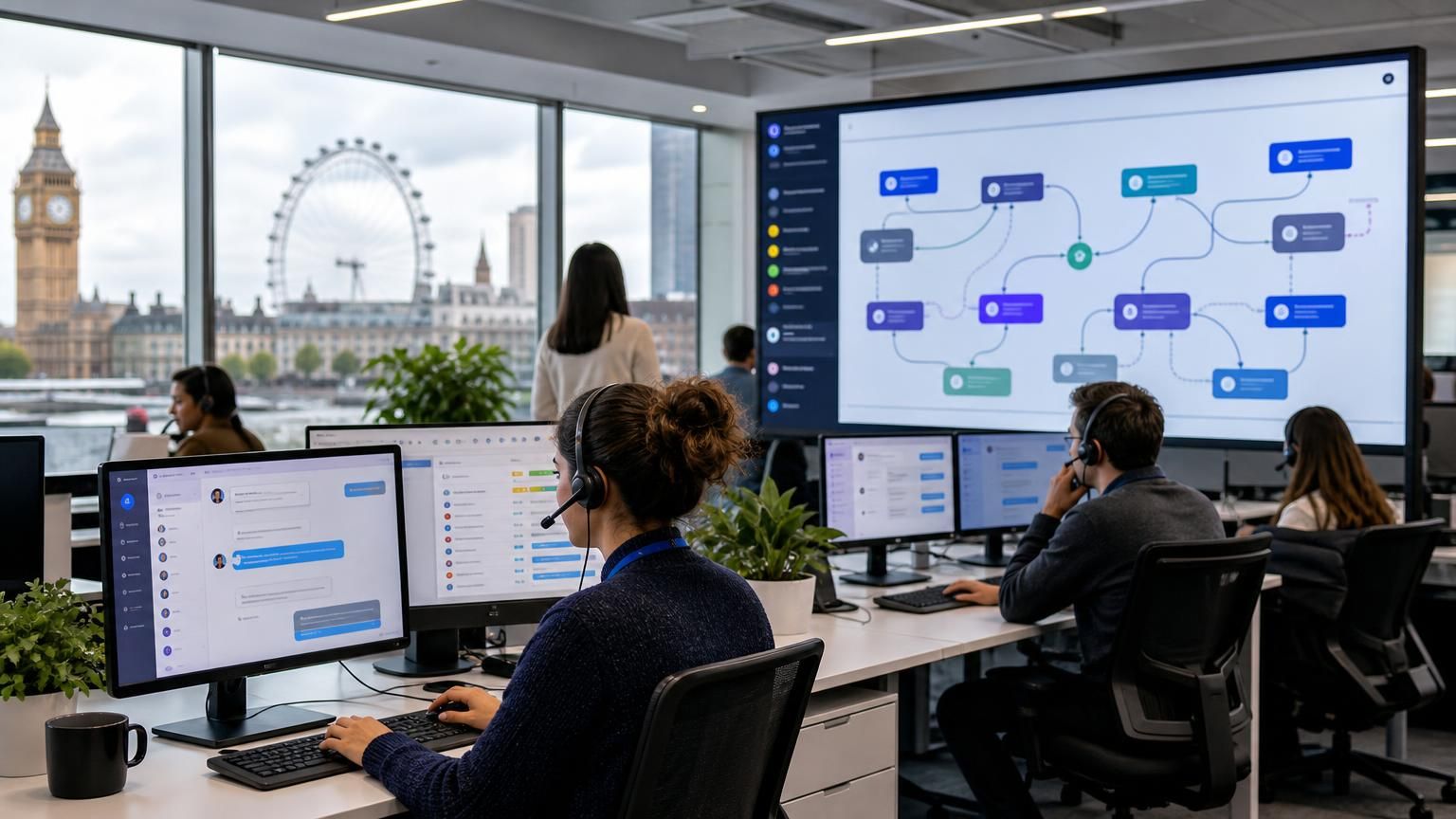
AI-to-human handoff thrash is the silent efficiency leak in modern support: chats that ping-pong between an AI bot and a human agent until the customer drops off, SLA breaches stack up, and audit trails become a mess. This guide gives support leaders, solution architects and UK public-sector teams a practical blueprint to stop thrash by designing “momentum-aware” hybrid chat workflows.
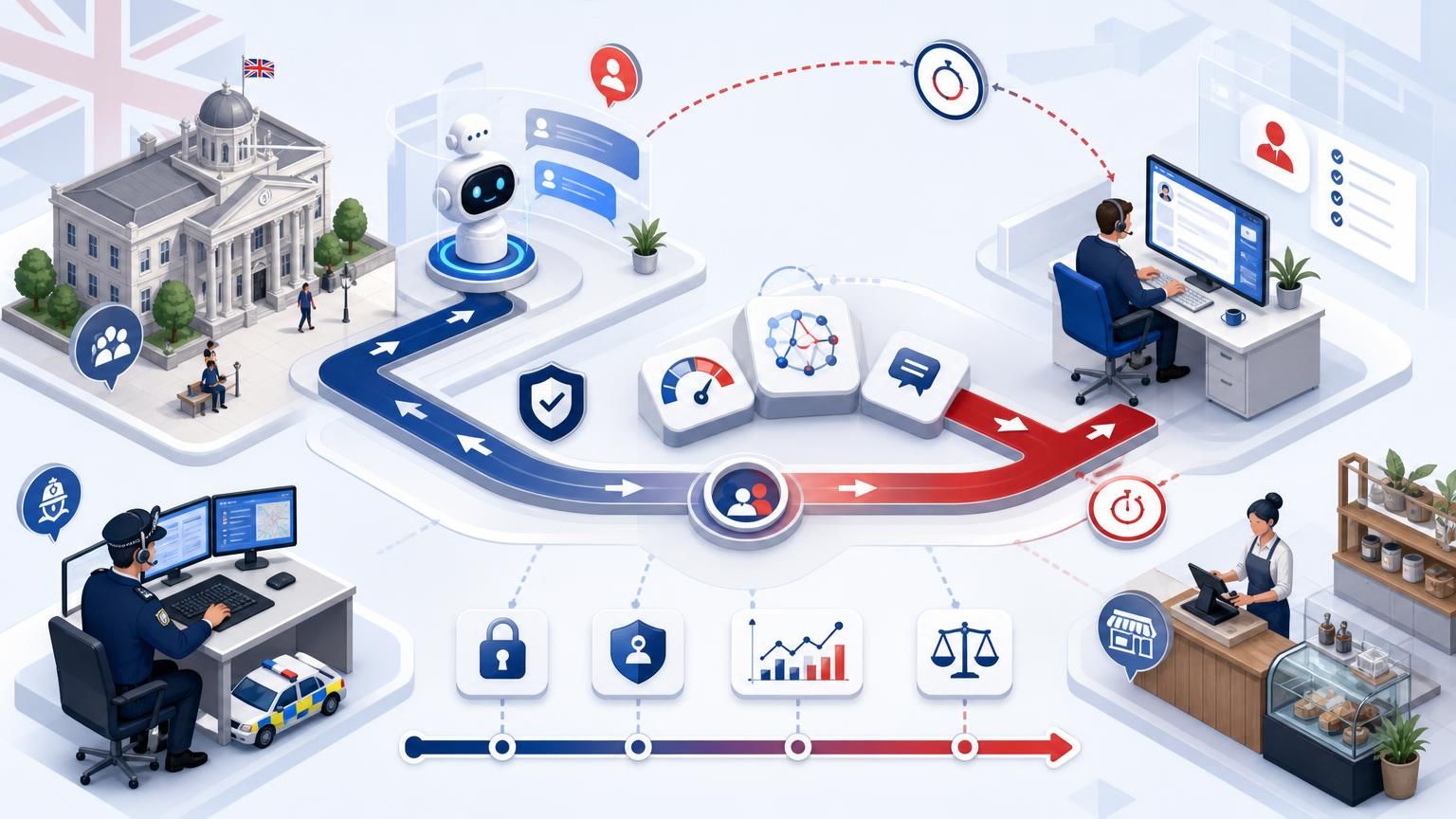
What is handoff thrash — and why it kills outcomes
Handoff thrash happens when a system repeatedly escalates and returns a conversation between AI and human agents without progress. The symptoms are clear:
- Longer average handle times and more agent context-switching.
- Higher abandonment rates and reduced first-contact resolution (FCR).
- Fragmented audit trails and unclear accountability — risky for councils, police and regulated teams.
Thrash isn’t just operational waste. For UK public bodies it threatens compliance: decision explanations, documentation and auditable processes are explicitly required under ICO guidance for AI-driven decision-making. (ico.org.uk)
The three root causes you need to design out
- Stateless handoffs — the AI drops context when it escalates.
- Over-eager escalation triggers — low-confidence answers push to humans too often.
- No escalation momentum rules — the system lacks rules to prevent immediate re-escalation back to AI after human edits.
Fixing these requires both product-level engineering and support process changes — not just swapping LLMs.
Rule-based chatbot vs pure LLM vs hybrid AI — why hybrid is the right control point
- Rule-based chatbots: deterministic and reliable for narrow flows, but brittle for anything outside predefined scripts.
- Pure LLM bots: fluent and flexible, but prone to hallucination and inconsistent behaviour without grounding.
- Hybrid AI live chat: combines RAG (Retrieval-Augmented Generation) grounding, deterministic workflow logic, and human-in-the-loop escalation. Hybrid systems give the accuracy and auditability teams need while keeping the conversational quality of LLMs.
In short: use rule engines for deterministic steps, RAG to ground answers in your documents, and LLMs for natural language — orchestrated together in hybrid workflows. IMSupporting’s RAG knowledge approach is a practical example of this grounding strategy. (imsupporting.com)
Momentum-aware design patterns (practical patterns you can implement this quarter)
- Single-pass escalation: once escalated to a human, prevent automatic re-escalation back to AI for a configurable “momentum window” (e.g., 10–30 minutes). This avoids immediate bouncebacks.
- Escalation tokens: attach an immutable token to the chat context that records the escalation reason, key facts and RAG citations. The human agent sees the exact source material the AI used.
- Confidence thresholds + human review rules: only auto-respond when the AI confidence and RAG citation score both exceed thresholds. Otherwise, route to a specialised queue.
- Sticky ownership: assign the conversation to one human owner after escalation until resolution or explicit transfer, reducing agent context switching.
- SLA-aware timers: embed SLA windows into the workflow so the system escalates proactively to preserve target response times rather than oscillating.
- Explainable handoff notes: when AI hands off, send a short machine-generated summary (2–3 bullet points) showing why it escalated and which documents it used. Keep this summary as part of the audit trail.
These patterns are implementation-ready in visual hybrid workflow builders that support conditional routing, API lookups and persistent context. See the Hybrid AI Chat Workflows visual builder for examples of conditional branching and momentum paths. (imsupporting.com)
A statistics-style reality check (what you can expect)
In real deployments where RAG is used to ground answers and hybrid rules are applied at triage, organisations report meaningful deflection and automation: for example, RAG-led agents can resolve a significant share of routine requests without human input, reducing the load on L1 teams and allowing skilled staff to focus on complex cases. IMSupporting highlights cases where up to ~40% of routine tickets are resolved automatically when knowledge is properly indexed and high-quality agent interactions are used to train the model. (imsupporting.com)
UK-hosted, auditable architecture checklist (must-haves for councils, police and regulated teams)
- UK data residency and UK-hosted infrastructure for sovereignty and procurement comfort. IMSupporting offers UK-hosted deployments as standard on its platform. (imsupporting.com)
- Persistent chat transcripts with immutable escalation tokens and a tamper-evident audit trail.
- RAG citations linked to source documents so every AI answer can be traced back to a specific policy, statute or guidance.
- Documentation and DPIA-ready artefacts as required by ICO guidance on explaining AI decisions and security/data minimisation. (ico.org.uk)
- Role-based access controls and retention policies aligned with UK GDPR and local records schedules.
Meeting these items protects you during audits and reduces procurement friction for public-sector tenders.
Operational playbook — agent steps and KPIs
- Triage rules: define intent buckets suitable for AI-first handling vs human-first routing.
- Agent onboarding: train agents to review AI’s RAG citations and to add a short post-resolution note that feeds back into model improvement.
- Metrics: track bounce rate (AI → human → AI), single-pass resolution, time-to-first-human, FCR, and the proportion of AI-resolved cases.
- Continuous improvement loop: sample escalated chats weekly to retune confidence thresholds and update RAG indexes.
How to implement quickly — 6 pragmatic steps
- Map 5 high-volume intents and classify them as AI-first or human-first.
- Index your policy docs and FAQs into a RAG knowledge store. See IMSupporting’s RAG feature to turn documents into instant answers. (imsupporting.com)
- Build visual workflows that enforce single-pass escalation and momentum windows. Reference the Hybrid AI Chat Workflows visual builder for modular examples. (imsupporting.com)
- Add immutable escalation tokens and short AI handoff summaries to every escalation.
- Roll out in a live pilot with SLA-aware timers and a small agent cohort.
- Measure bounce rate and agent time savings; iterate.
Final checklist for procurement and risk teams
- Can the vendor provide UK-hosted options and clear data flows?
- Are RAG citations exportable for audit requests?
- Is there a visual workflow editor that lets you embed SLA logic without code?
- Can the system produce documentation required for ICO audits and DPIAs?
If the answer is yes to these, you’re ready to replace inefficient ping-pong with single-pass, auditable momentum.
Next steps & CTA
Momentum-aware hybrid live chat is the practical middle ground between brittle chatbots and unconstrained LLMs — and it’s a must for UK public services and regulated organisations that need control, auditability and better outcomes. Start by indexing your core documents into a RAG knowledge store and building single-pass escalation workflows.
Explore a UK-hosted platform with RAG-powered knowledge and visual hybrid workflows that make momentum rules simple to deploy: https://imsupporting.com/feature-rag-based-ai-agent-knowledge.php and https://imsupporting.com/feature-hybrid-ai-chat-workflows.php. (imsupporting.com)
Ready to pilot a momentum-aware workflow for your council, housing association or regulated team? Book a demo and start a 30-day UK-hosted trial at https://imsupporting.com/ — get a configuration that enforces single-pass escalation and audit-ready handoffs from day one. (imsupporting.com)