
The problem: live chat is a liability if it hoovers up data
Many UK councils, housing associations and regulated teams install live chat to speed service, only to find the widget becomes a data vacuum. Every unstructured message, file upload or ID screenshot creates a record that must be stored, managed and sometimes disclosed. That increases risk, inflation in casework, and GDPR exposure — especially where automated AI touches conversation logs.
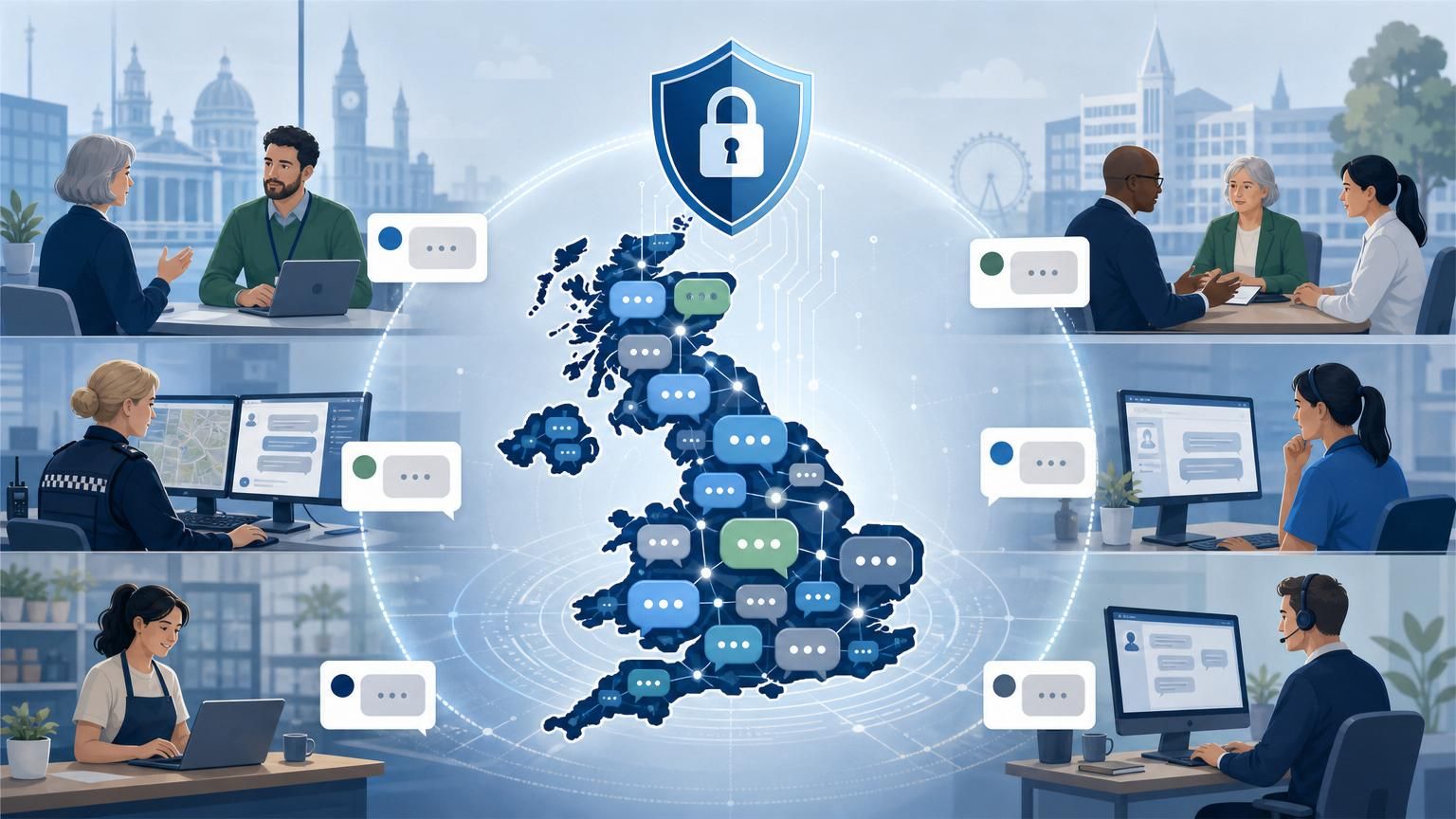
The good news: used correctly, live chat still delivers conversion and service gains. Engaged visitors convert at far higher rates; vendor benchmarks show overall conversion lifts of around 20% after adding chat where it matters. ()
But that commercial upside must be balanced with legal duties. The ICO’s data minimisation principle is explicit: only process what is adequate, relevant and limited to the purpose. For public bodies and regulated organisations, this isn’t optional. (ico.org.uk)
The fresh idea: a zero‑trust data‑minimisation layer in hybrid AI live chat
Instead of asking for names, addresses and attachments at first contact, build a zero‑trust front line: an AI‑triage layer that verifies eligibility and intent without collecting PII until it’s necessary. That reduces stored data, speeds decisions, and preserves evidence only where required.
Why this is powerful for UK organisations:
- Lowers GDPR/DPO workload and reduces DSAR surface area. (ico.org.uk)
- Keeps early contact metadata lightweight for fast routing and prioritisation.
- Preserves a clear audit trail for human handoffs without storing unnecessary content.
- Fits public-sector needs for UK hosting and data residency while still using advanced triage. (local.gov.uk)
What zero‑trust triage looks like in practice
1) Intent-first prompts, not PII-first forms
Use short intent prompts that capture the reason for contact: "housing repair", "report a streetlight" or "report a suspicious vehicle." The triage AI maps intent to a workflow — no name or DOB yet.
2) Progressive disclosure: capture only what’s required
Only request personal details when the case reaches the stage that needs it (e.g., to create a case, book a visit, or when law enforcement needs to verify identity). This is progressive disclosure, not friction.
3) Local, auditable handoff to a human with RAG grounding
When the AI provides a suggested answer, ground it to a verified knowledge set (RAG — retrieval‑augmented generation) and log a short, policy‑aware rationale. If the case is high‑risk, require human validation before collecting PII. IMSupporting’s RAG feature is purpose-built for this type of verified answer delivery and audit trail. https://imsupporting.com/feature-rag-based-ai-agent-knowledge.php
4) Short‑lived tokens for verification
Use ephemeral tokens or one‑time links to let users verify their identity securely when needed instead of asking for uploads in the chat window. Tokens can be exchanged for a secure form hosted in a UK environment.
5) Consent, purpose and minimal storage rules baked into workflows
Design chat workflows so consent is captured exactly when PII is being requested, and store only what the law requires (and for only as long as required). IMSupporting’s hybrid AI chat workflows make it practical to enforce these rules at the point of contact. https://imsupporting.com/feature-hybrid-ai-chat-workflows.php
Different technologies, different risks — a clear taxonomy
Understanding technology differences is crucial when designing a zero‑trust approach.
- Rule‑based chatbots: follow scripted flows and are predictable. Good for strict data minimisation because they only collect what they ask for. Limited in understanding nuance or handling edge cases.
- Pure LLM bots: can appear fluent, but may hallucinate, over-collect or infer PII unintentionally. They’re powerful for open-ended answers but risky if not grounded and audited.
- Hybrid AI live chat: the middle path. AI handles instant triage, RAG ensures answers are pulled from verified knowledge, and human agents intervene for high‑risk or ambiguous cases. This design supports zero‑trust data minimisation while keeping speed and conversion benefits.
Design preference for UK public and regulated teams: hybrid AI with strict RAG grounding and auditable human handoffs.
Regulatory and market context — why now
The UK’s Data (Use and Access) Act programme and updated ICO guidance have reshaped expectations for automated decisioning, transparency and data minimisation. Many DUAA provisions and ICO guidance updates came into force in 2026 and tighten how AI systems must demonstrate human oversight and purpose limitation. Build your live chat to satisfy those requirements now, not later. ()
Local Government Association work and recent council digital transformation programmes show rising demand for robust digital front doors — councils want fast triage while reducing back‑office duplication. A zero‑trust chat front door is a pragmatic way to square those needs. (local.gov.uk)
Implementation checklist (practical, procurement-ready)
- Map core intents and the minimal dataset required to progress each intent. Keep a one‑row decision record: intent → minimum PII → retention period.
- Choose a hybrid AI platform that supports RAG grounding, workflow enforcement and UK hosting. Link your procurement spec to hard requirements: UK data residency, auditable human handoffs, and tokenised verification. See IMSupporting’s feature pages for implementation specifics. https://imsupporting.com/feature-rag-based-ai-agent-knowledge.php
- Design progressive disclosure flows: intent capture → contextual help → conditional PII request.
- Implement ephemeral verification tokens and secure UK-hosted forms rather than file uploads in chat.
- Configure alerts for high‑risk keywords (safeguarding, crime, vulnerable adult) to force immediate human escalation and minimal immediate logging.
- Run DPIA and tabletop drills that simulate DSAR requests and automated decisioning reviews.
KPIs that matter (not vanity metrics)
- Conversion lift where chat is used on high‑intent pages (benchmark ~+20% where implemented correctly). ()
- Reduction in average stored PII per contact (target 40–70% reduction in first‑contact PII).
- Time to resolution for high-priority cases after hybrid handoff.
- Number of DSAR search hits reduced by minimising early PII collection.
Quick wins for councils, police and housing teams
- Move non-essential data capture off the chat transcript within 30 days and into case files only after consent or legal necessity.
- Replace file upload prompts with secure one‑time verification links hosted in the UK.
- Train agents on the distinction between triage metadata and evidence collection; enforce the latter only with explicit reasons and timestamps.
Ready to move beyond checkbox compliance?
Zero‑trust data minimisation is commercially sensible and legally prudent: it preserves the conversion and service benefits of live chat while dramatically reducing the risks and operational cost of hoarding PII. The technical pattern is straightforward — hybrid AI triage + RAG grounding + progressive disclosure + UK hosting — and it’s procurement‑friendly.
For a practical platform that combines RAG‑grounded AI, enforceable hybrid chat workflows and UK hosting, see IMSupporting’s product pages and implementation guides: https://imsupporting.com/ and explore the RAG and workflow features to map straight into your procurement spec. https://imsupporting.com/feature-rag-based-ai-agent-knowledge.php https://imsupporting.com/feature-hybrid-ai-chat-workflows.php
If you’re leading digital contact transformation in a council, housing association, police or regulated team, start by mapping intents and locking down the minimal data you actually need. When you’re ready to architect a zero‑trust hybrid chat front door that protects citizens and improves outcomes, book a demo with IMSupporting to see a UK‑hosted implementation in action. https://imsupporting.com/