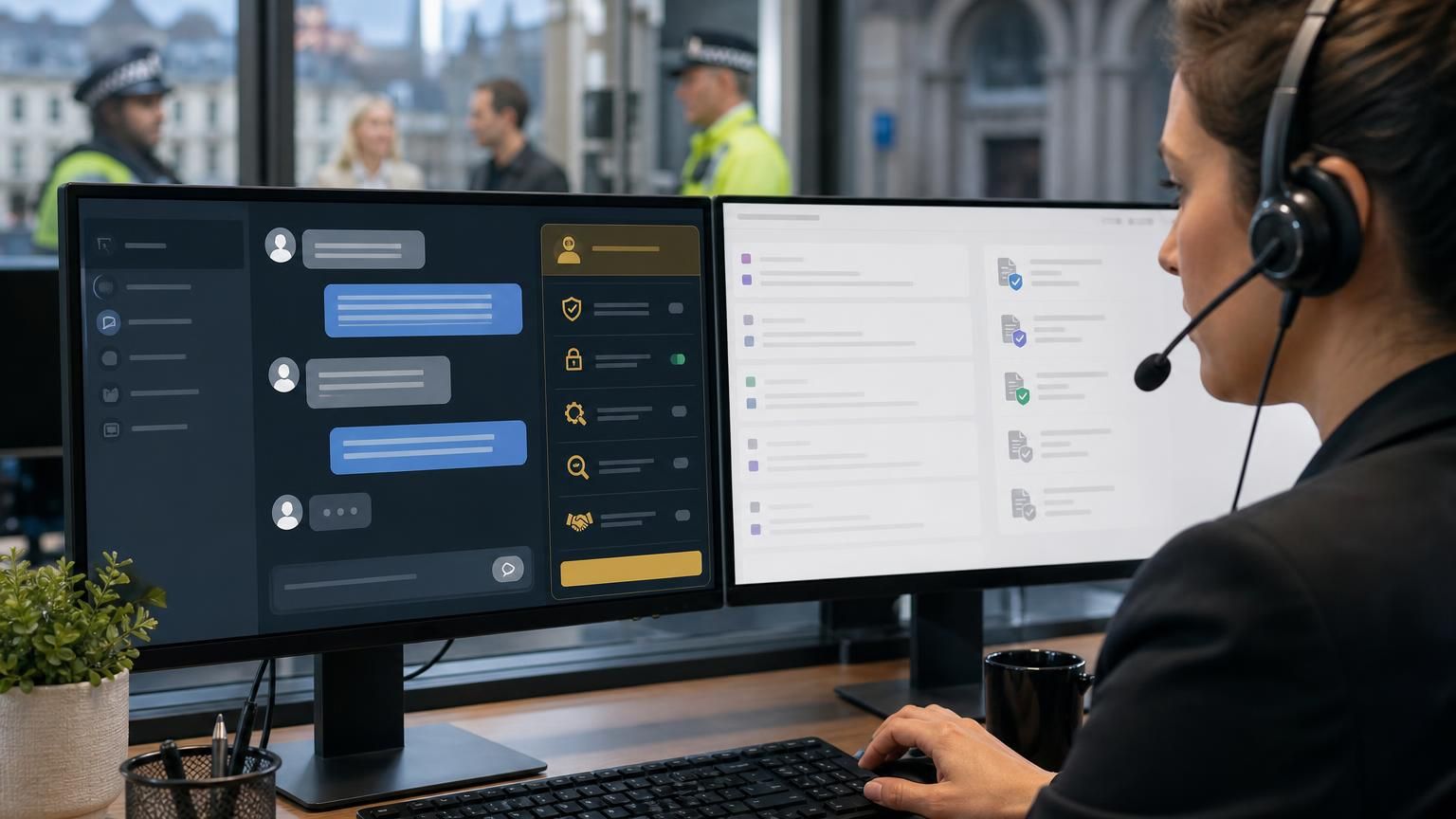
The problem: instant help vs sensitive risk
UK councils, police digital teams, housing associations and regulated organisations face a familiar tension: citizens expect immediate, 24/7 answers, but many enquiries contain personal or sensitive data that cannot be sent offshore or misused. Meeting both demands requires more than a standard chatbot or a siloed help desk — it demands a zero‑trust, UK‑hosted hybrid AI approach that enforces per‑conversation policy and hands off to humans when required.
Gartner and sector research show service teams are actively piloting GenAI for customer interactions — but adoption without controls creates regulatory and reputational risk. ()
What zero‑trust means for hybrid AI live chat
Zero‑trust here is practical and conversation‑level, not a security buzzword:
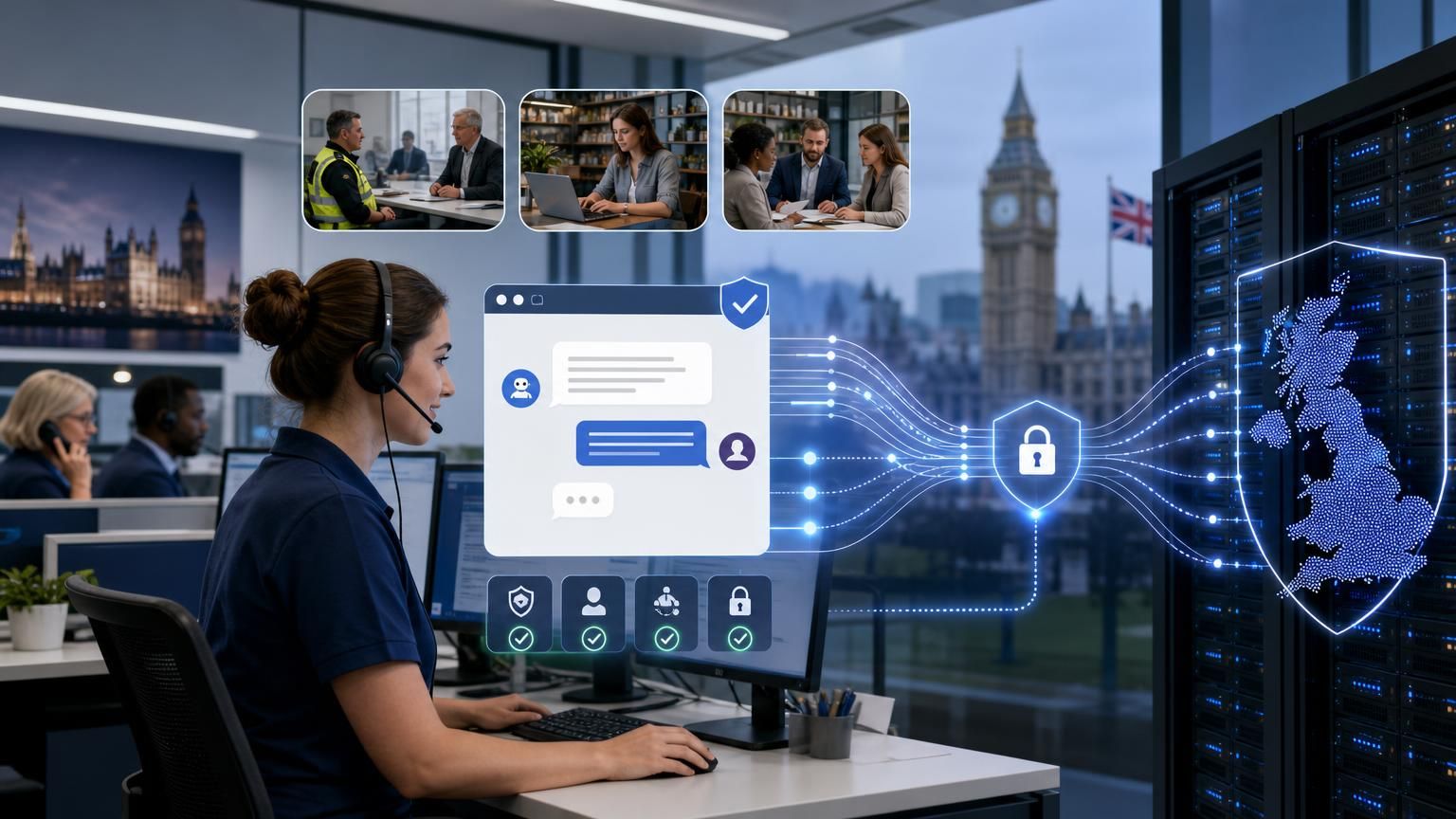
- Per‑conversation data residency: sensitive chats stay on UK infrastructure; non‑sensitive chats can use lighter processing. (gov.uk)
- Dynamic consent gating: ask for explicit consent before using personal data for AI training or third‑party processing. (ico.org.uk)
- Audit trail & immutable handovers: every AI reply, document retrieval and human takeover is logged and exportable for DPIAs and FOI requests. (imsupporting.com)
This reduces procurement blockers and makes live chat acceptable for teams that previously rejected generative AI on data‑sovereignty grounds.
Quick definitions — avoid confusion at procurement
- Rule‑based chatbots: scripted flows and conditional branches. Predictable, cheap, good for forms and fixed FAQs, but brittle for open queries.
- Pure LLM bots: large language models that generate free text from prompts. Fast and fluent but can hallucinate and may leak training data if not constrained.
- Hybrid AI live chat: RAG (retrieval‑augmented) models plus orchestration that ground AI in your documents, then hands off to human agents with full context — the pragmatic balance for regulated UK organisations. (imsupporting.com)
Why hybrid + zero‑trust outperforms the alternatives
- Accuracy: RAG retrieves authoritative content from your policies and knowledge base before the model answers — reducing hallucinations. (imsupporting.com)
- Auditability: hybrid flows log decisions and the documents cited, which is essential for ICO reviews and DPIAs. (ico.org.uk)
- Speed + safety: AI handles routine queries instantly (meeting customer expectations for immediate replies) while human agents focus on high‑risk or high‑value cases. HubSpot research finds fast responses matter to most customers. ()
Practical architecture: per‑conversation policy controls (stepwise)
- Classify on arrival: a lightweight rule set initially flags potential sensitivity (e.g., keywords for health, finances, personal identifiers). Use rule‑based triage to avoid sending sensitive content to external LLMs.
- Consent and minimisation: if the chat may use personal data, show an inline consent capture and minimise stored fields (collect only what you need). (ico.org.uk)
- Decide processing path: route the chat to UK‑hosted RAG agents (grounded answers) if safe; otherwise route to a human operator or a restricted in‑country AI instance. (gov.uk)
- RAG ground and answer: the hybrid AI queries the organisation’s documents and returns an answer with citations. Log which documents were used to generate the reply. (imsupporting.com)
- Handover with context: if escalation happens, hand the full AI transcript, document citations and metadata to the human operator — no repetition, full audit trail. (imsupporting.com)
Sample policy rules you can deploy today
- Never send messages containing NHS numbers, full bank account numbers, or biometric data to third‑party LLMs.
- If a customer discloses a safeguarding concern, escalate to human agents and record the case under local safeguarding processes.
- Only use AI training data when explicit consent has been granted and stored with the conversation ID.
These rules can be encoded into the chat workflow builder so technical teams don’t need to change code when the policy evolves. See how hybrid AI chat workflows let you design conditional routing and AI actions visually. (imsupporting.com)
Measuring success — the KPIs that matter
- First response time (FRT): aim to meet the modern expectation for near‑instant replies on live chat to avoid lost transactions. Use AI to reduce FRT to seconds while humans improve resolution quality. ()
- Sensitive escalation rate: lower is good only if the AI is safely handling routine enquiries; track missed escalations as a safety metric.
- Audit completeness: percent of conversations with full provenance (documents cited + handover log).
- Cost per handled contact: hybrid AI should lower labour hours for routine work while keeping human capacity for complex cases.
Practical checklist for procurement and legal teams
- Require UK hosting and documented data flows for all chat processing. (imsupporting.com)
- Ask for RAG capabilities so answers are grounded in your own docs (not generic LLM hallucinations). (imsupporting.com)
- Demand workflow-level policy controls (consent capture, routing, redaction) and audit exports for DPIA evidence. (imsupporting.com)
- Insist on a human‑in‑loop SLA and clear escalation paths for safeguarding and regulated decisions.
Quick case use cases — where zero‑trust hybrid chat wins
- Councils: housing benefit queries that often include PII — AI answers basic eligibility questions but routes claims and ID checks only to UK‑hosted human teams.
- Police non‑emergency channels: AI triages reports, captures evidence metadata, but prohibits automatic disclosure of biometric or investigative material to external models.
- Housing associations: AI helps tenants with rent schedules and repairs, while rent arrears and sensitive tenancy issues escalate to caseworkers with full audit trails.
Tools and outputs: make procurement simple
Look for platforms that combine RAG‑grounded AI, a visual workflow builder for hybrid chat, and UK‑hosted infrastructure. IMSupporting’s platform shows these building blocks in action — from RAG knowledge features to hybrid AI chat workflows. (imsupporting.com)
Final checklist before you sign a contract
- Can the vendor guarantee UK data residency for sensitive conversations?
- Does the platform provide document‑level citations and exportable audit logs?
- Are consent and data minimisation enforced at the workflow level?
- Is there a clear human handover that preserves context and evidence for future audits?
If you need a practical UK‑hosted example that bundles RAG knowledge, visual hybrid workflows and audit‑ready handovers, review the feature pages for RAG-based AI knowledge and Hybrid AI Chat Workflows to compare the capabilities against your policy checklist. (imsupporting.com)
Next step — start with a safe pilot
Run a small pilot focused on one high‑volume, low‑risk flow (e.g., status updates, payments due dates). Configure per‑conversation policy, log every handover, and run your DPIA in parallel. When you can demonstrate safe operation with exportable audit trails, expand to higher‑sensitivity flows.
Ready to design a UK‑hosted zero‑trust hybrid AI live chat that meets public‑sector standards? Start a free trial or book a demo at IMSupporting to see RAG grounding and hybrid workflows in action and get a UK‑hosted proof‑of‑concept. https://imsupporting.com/